
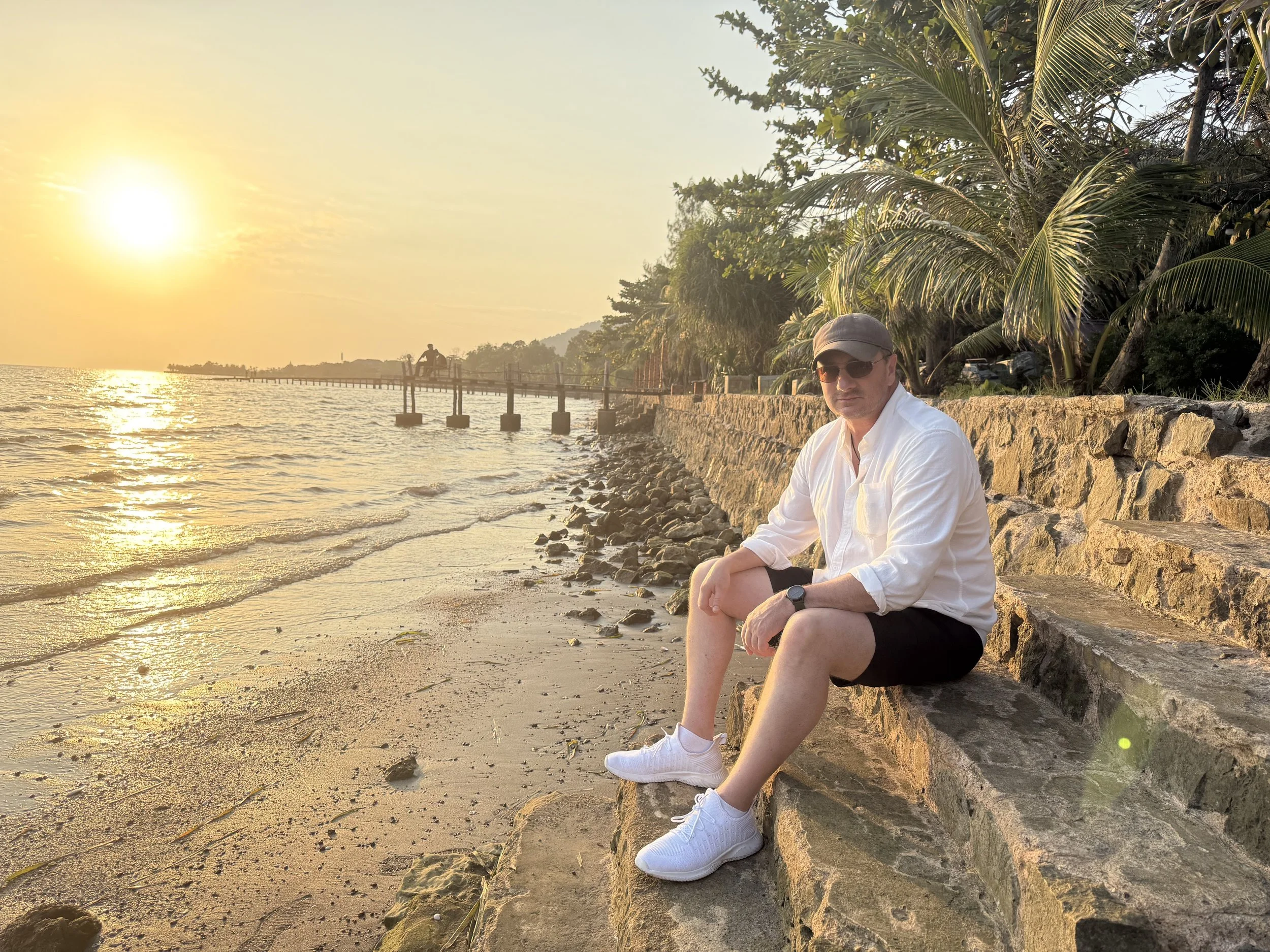
Why I Chose Kep, Cambodia: What Life Is Really Like in a Quiet Seaside Town
When I told people I was moving to Cambodia, I got some interesting reactions.
Some people were excited for me. Some thought I was crazy.
One person warned me that I was going to wake up missing a kidney.
Someone else basically told me that if I got kidnapped, I was on my own because they weren't coming to Cambodia to rescue me.
Well, I've been here for a while now.
I still have both kidneys.
And Cambodia; particularly the little seaside town of Kep where I chose to live; is nothing like the place some people back home imagined.
Kep isn't perfect. It can be frustrating. It can be incredibly hot. Sometimes I can't find something I need without driving to three stores and asking four people. During rainy season, it can feel as though the rain will never stop.
And if you're looking for nightlife, you've definitely come to the wrong town.
But if I had to make the decision all over again?
I'd choose Kep in a heartbeat.
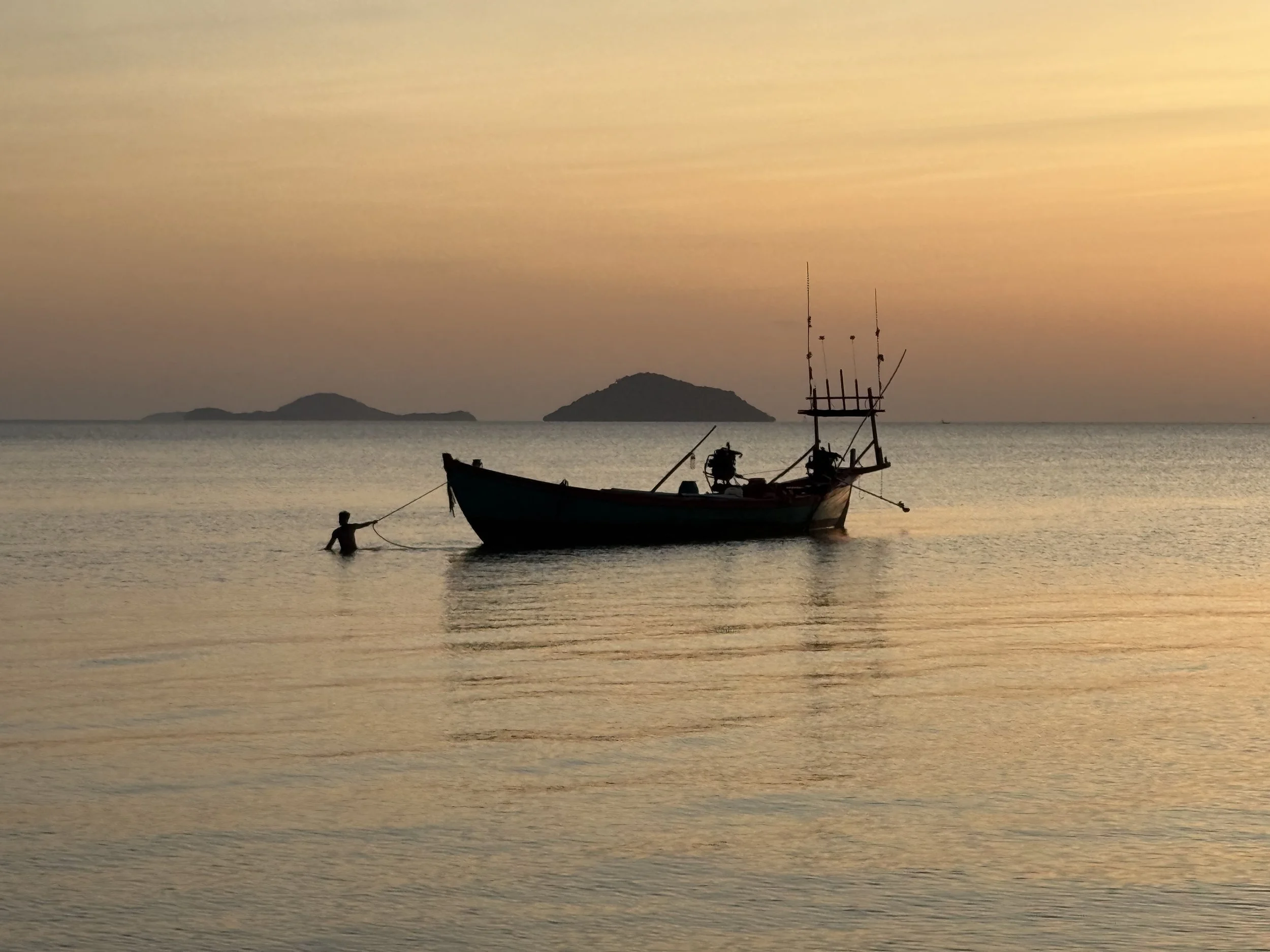
Fishing boat at Angkol Beach during sunset.
Why Kep?
Kep sits along Cambodia's southern coast near the Gulf of Thailand.
It's Cambodia's smallest province, famous for blue swimmer crab, fresh seafood, Kep National Park and its history as a seaside retreat. Kep National Park rises directly behind town, while the sea stretches out in the other direction.
That's part of what attracted me here.
I wanted the ocean.
I wanted mountains.
Most importantly, I wanted quiet.
I spent 31 years teaching in a New York State public school. Before that, I grew up in New York and actually worked on Wall Street before I taught.
I've done city life.
When I retired and moved halfway around the world, I wasn't looking to recreate it.
I wanted to go in the opposite direction.
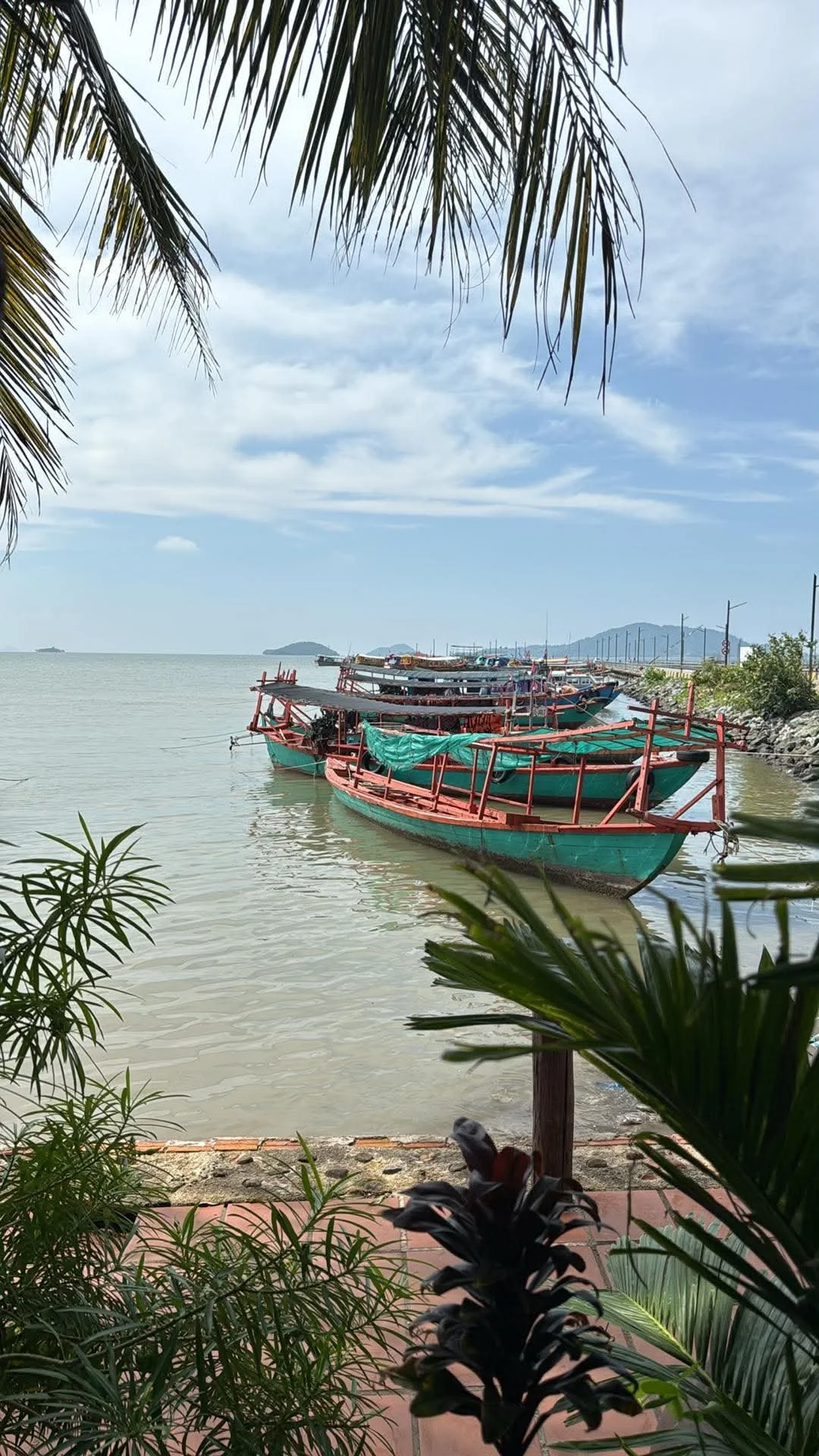
View of the Gulf of Thailand and Kep Pier from Deli’s Kep
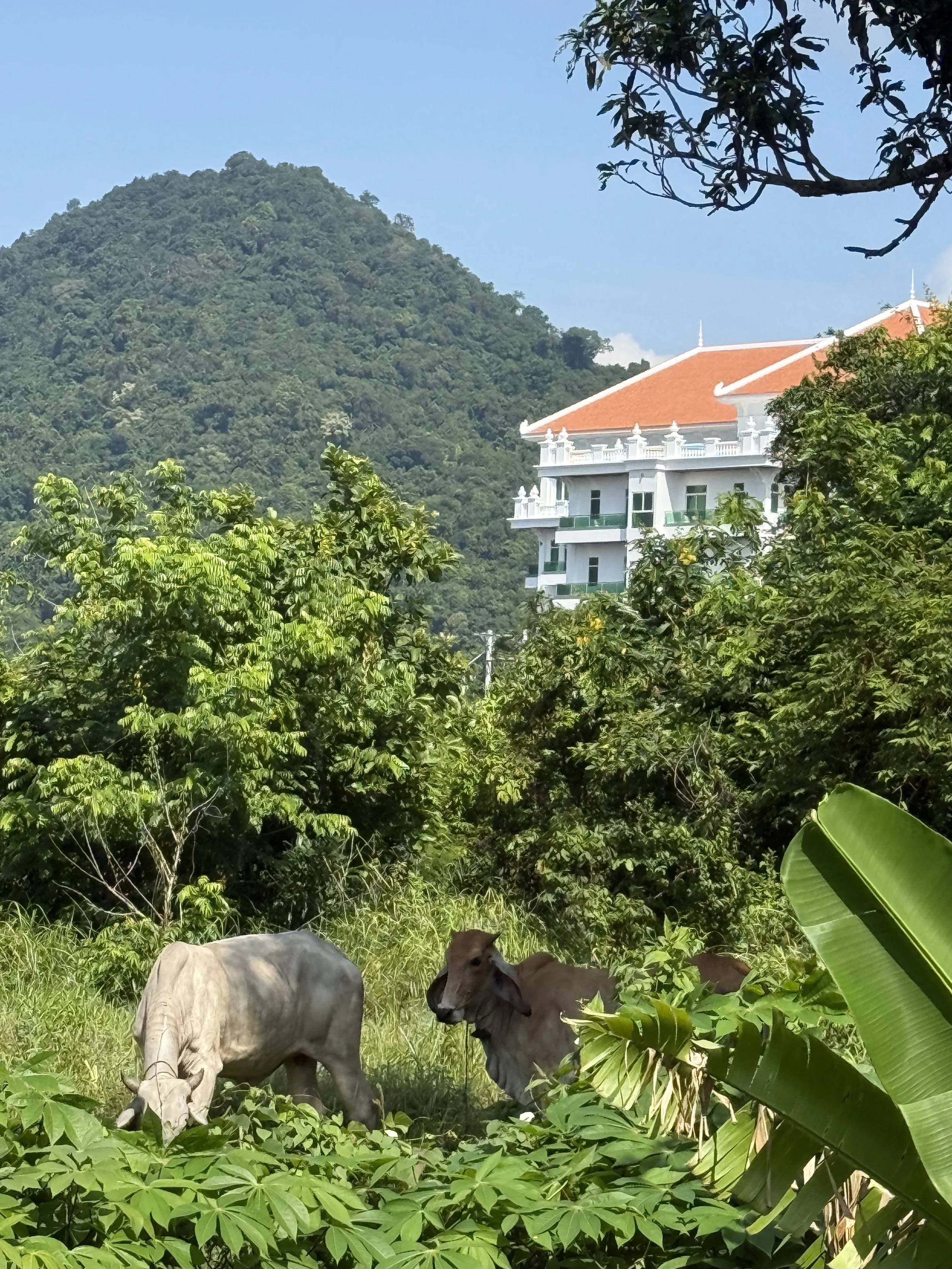
The view from my driveway of the Brahma cows and the mountains near Kep National Park.
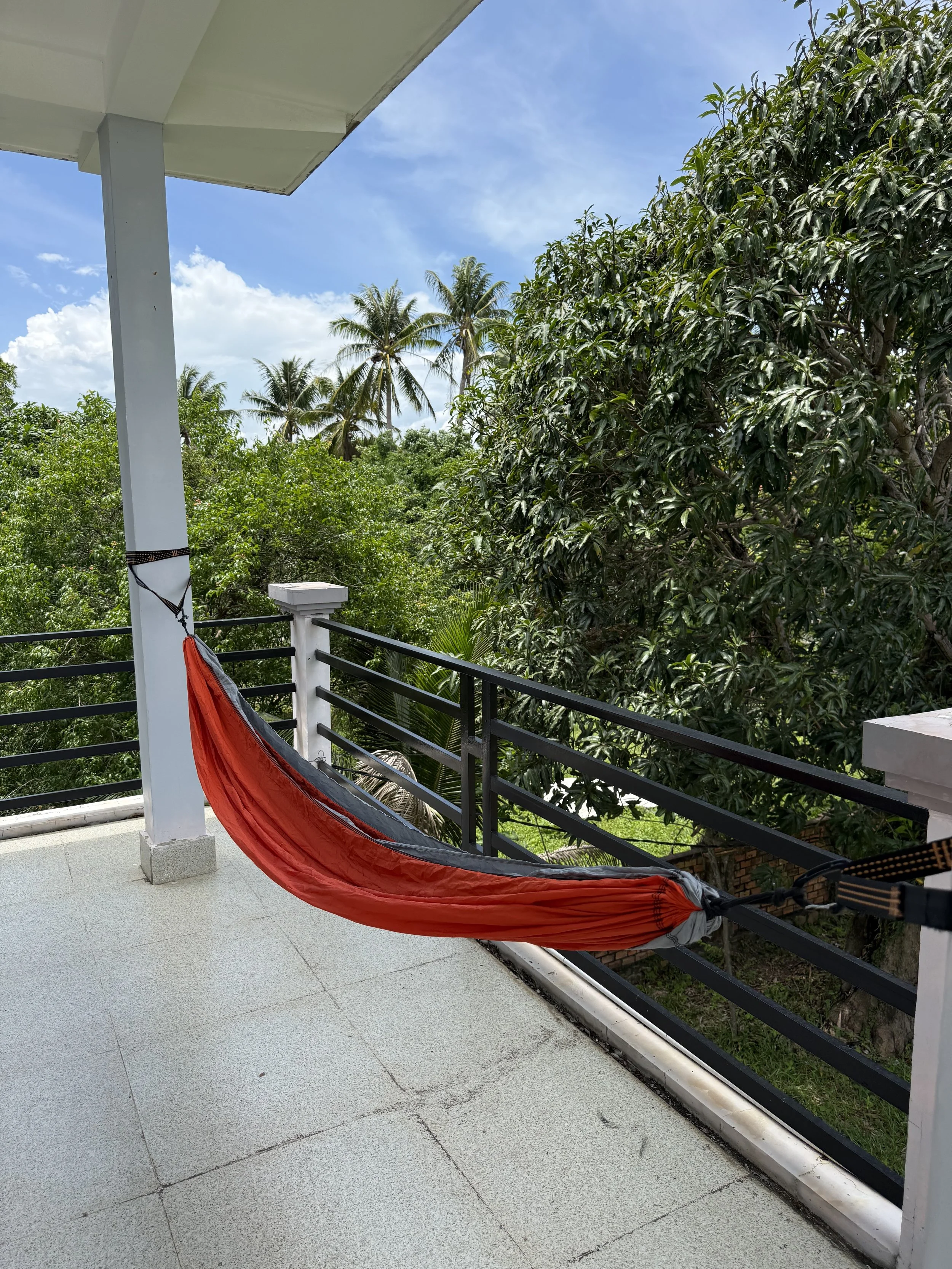
My hammock setup on my rooftop deck.
Why Not Kampot?
I seriously considered Kampot.
In many ways, Kampot would have been the easier choice.
There are more stores, more restaurants, more Western products, more services and a larger expat community. In fact, when we need something that isn't available in Kep, Kampot is often where we go.
So why not simply live there?
Because convenience wasn't what I moved halfway around the world looking for.
I wanted a slower life.
And I wanted to be closer to the beach.
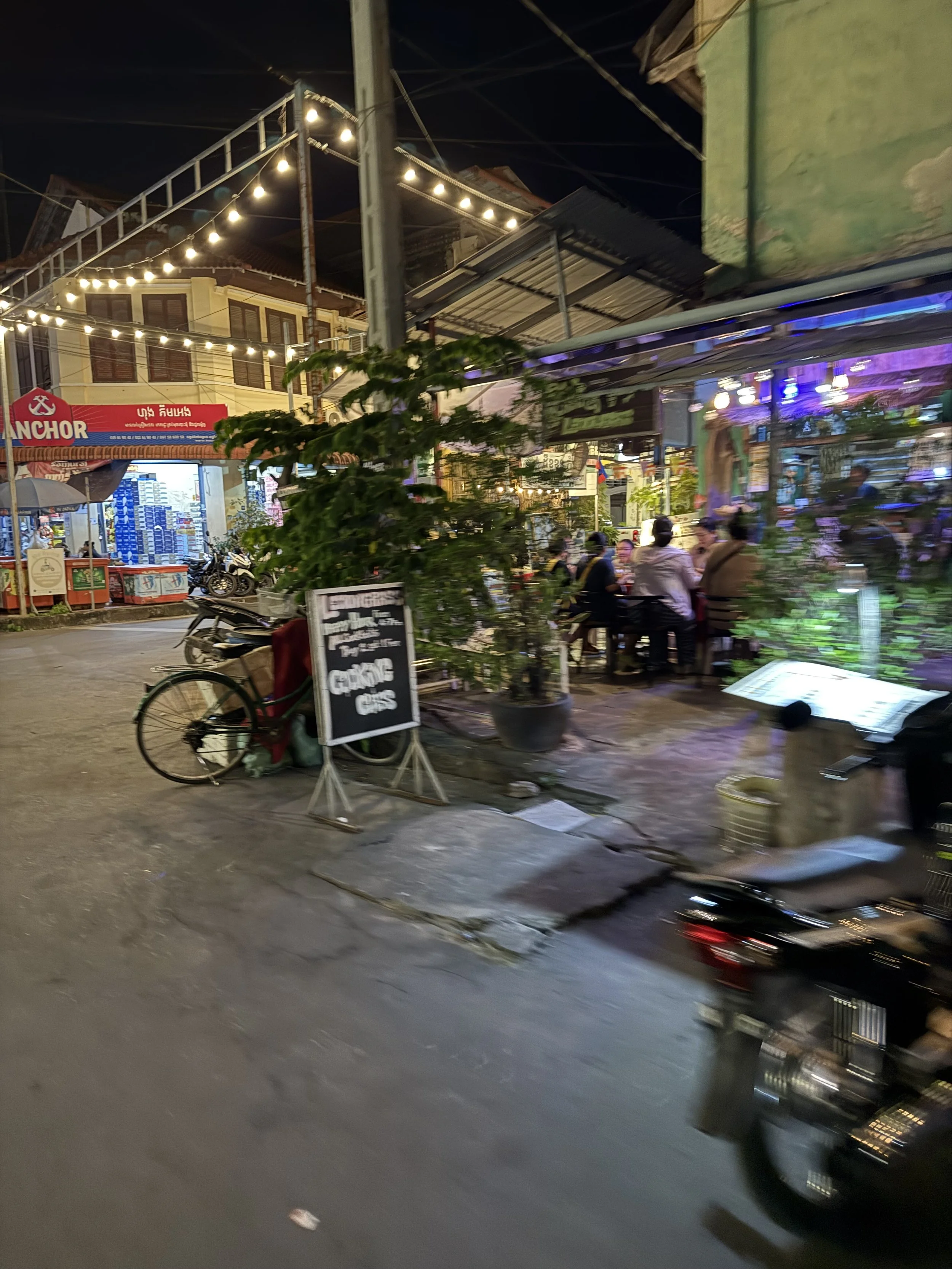
Kampot night life.
What About Siem Reap or Phnom Penh?
Siem Reap has plenty going for it too. There is a large expat community, reasonable prices, restaurants, nightlife and plenty to do.
There are also a lot of tourists.
For many people, that's part of the attraction.
For me, it wasn't.
Phnom Penh offers virtually every big-city convenience I could want. Shopping. Restaurants. Entertainment. Modern apartments. Major services.
But it's still a city.
And after growing up in New York and spending most of my adult life in the United States, I wasn't interested in retiring to a major city.
I wanted something even more rural than the small Pennsylvania town I had left behind.
Kep gave me that.
I didn't choose Kep because it had everything.
I chose Kep because it didn't.
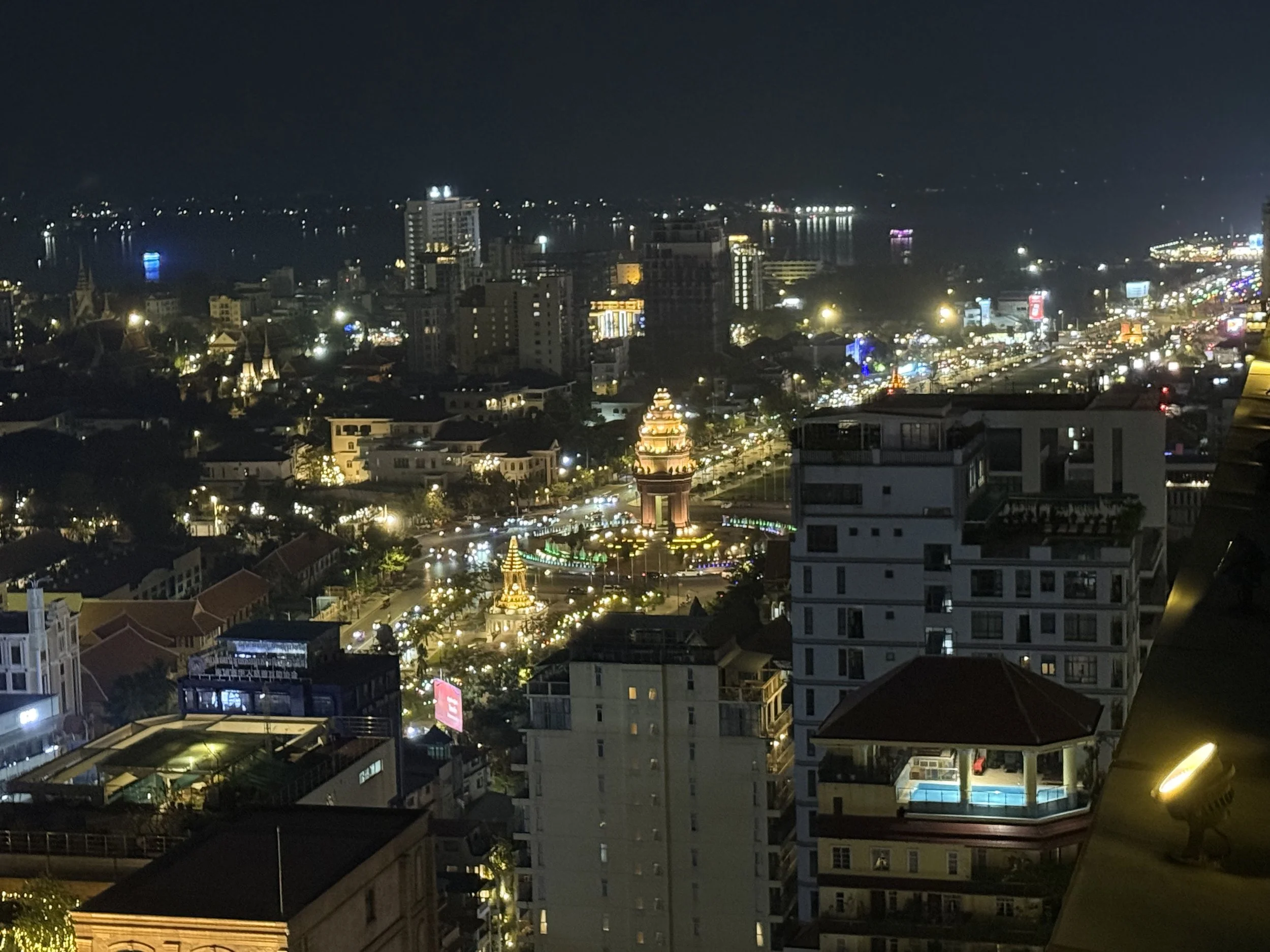
View from the Raffles Hotel of the Independence Monument in Phnom Penh
Life Here Runs on "I Know a Guy"
One of the first things I learned about Kep is that things don't necessarily work the way they did back home.
Here, you know a guy.
And if you don't know a guy, you know somebody who knows a guy.
Our driver, who takes us back and forth to Phnom Penh, is the husband of one of Kea's former colleagues.
Through him, we found our mechanic and the man who helped me buy a car.
Not long after I bought my used 2011 Toyota Prius, the car wouldn't start. The 12-volt battery needed to be replaced.
Back home, I might have called roadside assistance, found a repair shop, made an appointment or had the car towed.
Here?
We called our driver.
Our driver picked up the mechanic.
The mechanic brought his tools to our house and replaced the battery right there.
The whole thing cost me about $70.
Problem solved.
That's Kep.
You find a driver.
The driver knows a mechanic.
Someone else knows an electrician.
Someone knows a plumber.
Someone knows where to find that strange thing you've been searching for all week.
Eventually, you're the one who knows a guy.
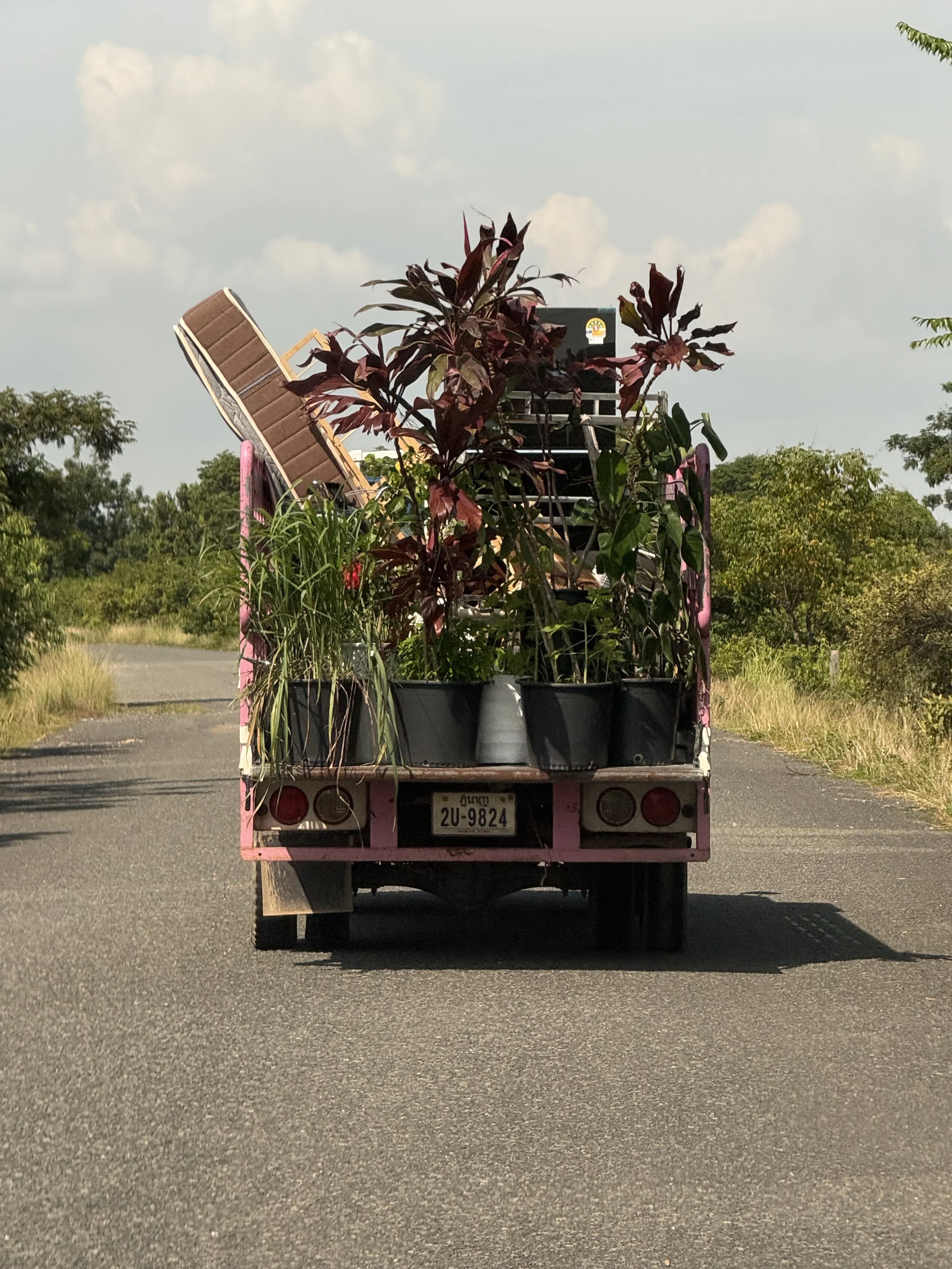
The guy who moved me into my new house for $55 USD.
Eventually, You Develop Your Kep Routine
Shopping here is different too.
There isn't one enormous supermarket where I buy everything for the week.
Instead, we've developed a circuit.
We have a beverage supplier where we'll buy seltzer, Coca-Cola, beer and other drinks.
We have our regular market for vegetables and everyday food.
We have the Crab Market for seafood.
We have Deli’s Kep when we want fresh French bread or pastries.
There are other stores for other things.
If we can't find something in Kep, we try Kampot.
And if we can't find it there, we can often have it sent down from Phnom Penh.
Most Western products can be found, but imported goods generally cost more and the selection isn't as large. But; I did find Hellman’s mayonnaise…. If you know, you know.
At first, this all sounds terribly inconvenient.
After a while, it becomes your routine.
You have your vegetable person.
Your beverage place.
Your bread place.
Your seafood market.
Your mechanic.
Your delivery service.
And that's when something changes.
At first you're trying to figure out how everything works.
Then one day you're not figuring it out anymore.
You're just living here.
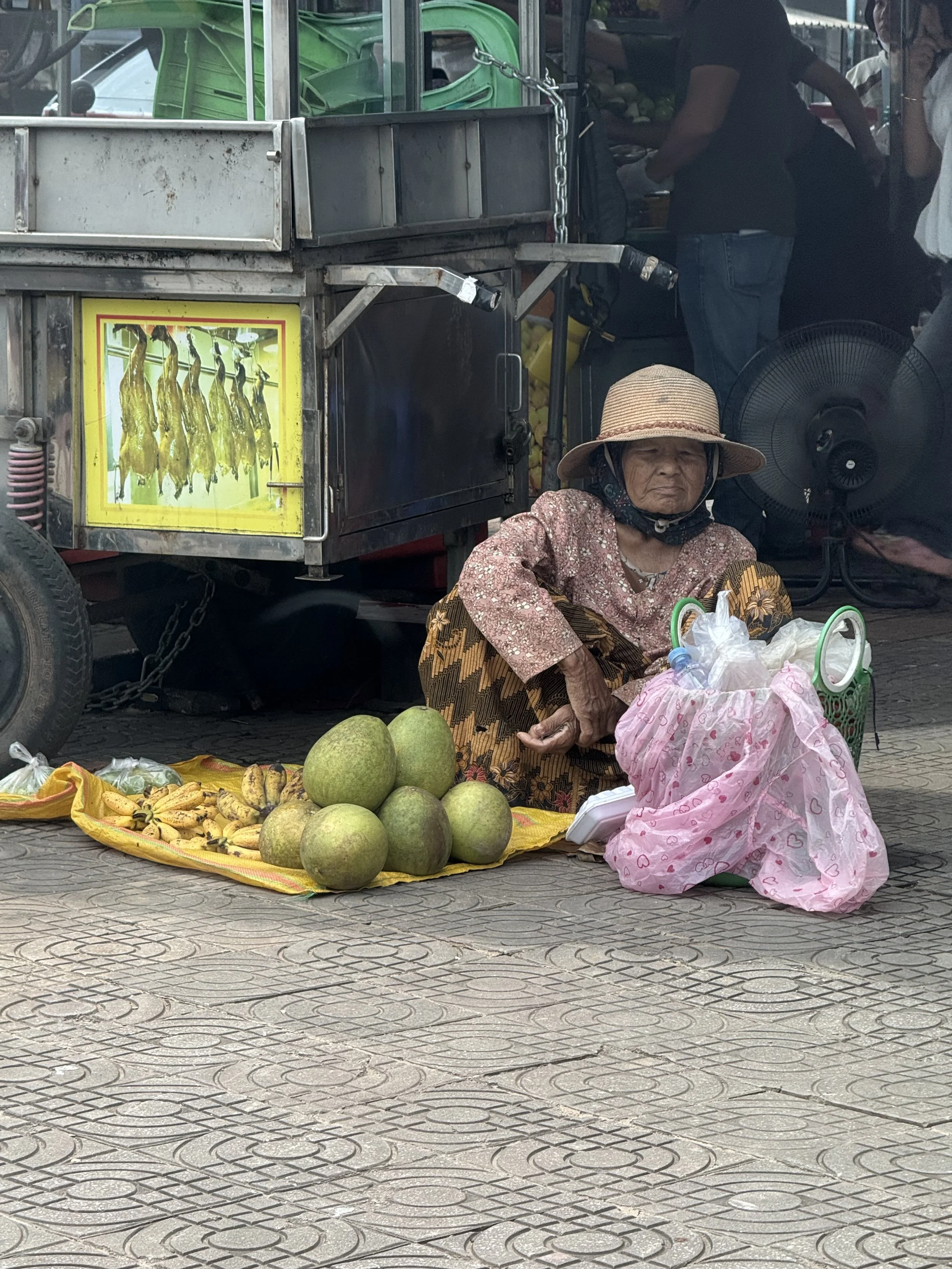
Old woman sells coconuts and bananas from her property on the streets of Kep.
Fresh Food Is Part of Everyday Life
One of my favorite things about living in Kep is the food.
We go to a local market almost every day for fresh vegetables and other ingredients. Farms surround this part of Cambodia, and the famous pepper-growing region around Kampot is practically in our backyard.
Kea and I also grow some of our own food.
We have mango, papaya, avocado, guava and banana growing around the property, along with a type of forest cherry.
We're growing lemongrass and peppers too, and when we move into our next house, we'd like to expand the garden.
There's something incredibly satisfying about walking outside and picking something you're actually going to use in the kitchen.
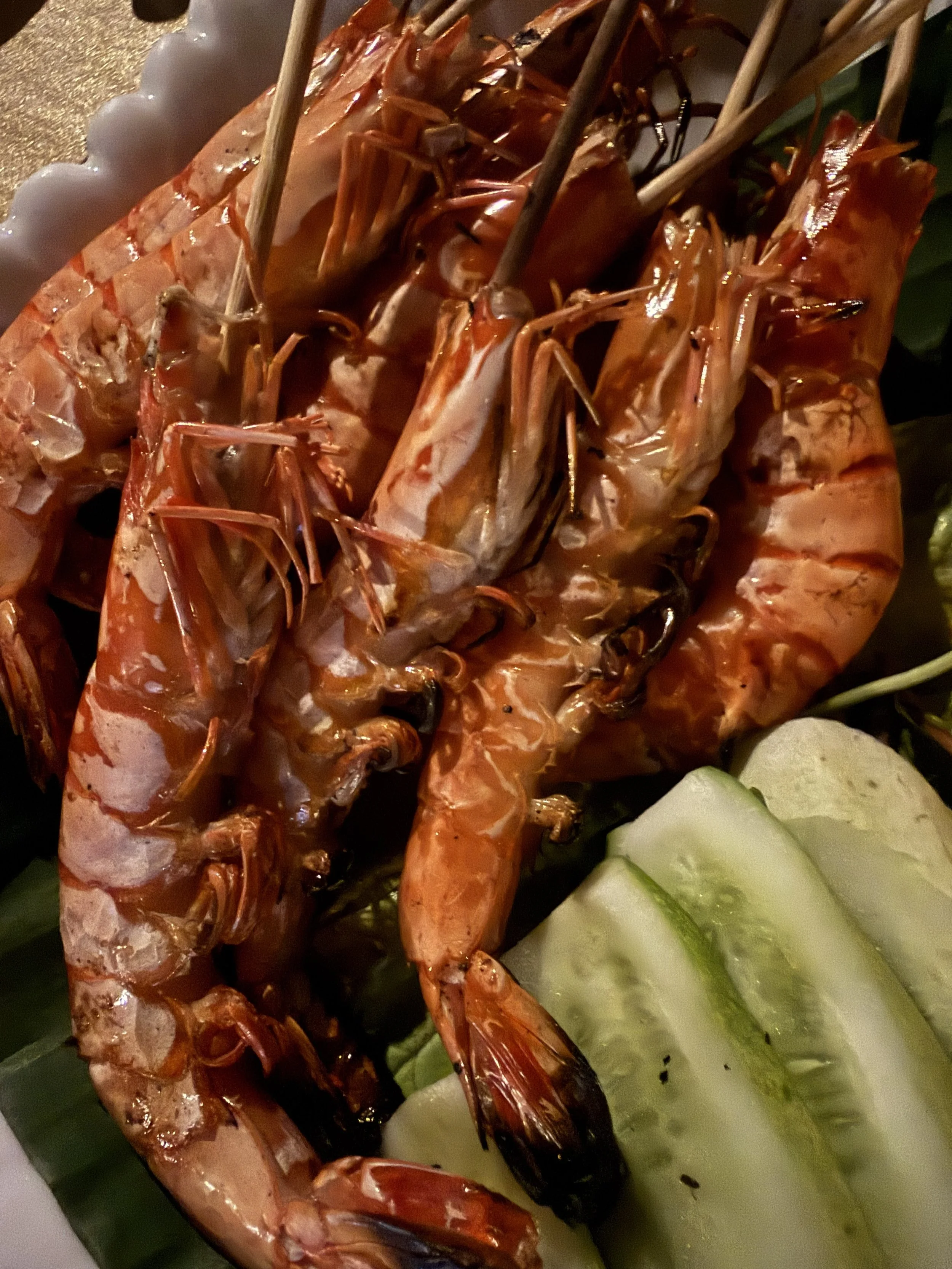
Freshly grilled prawns form the Kimly Restaurant at the Kep Crab Market
French Bread in a Cambodian Seaside Town
Then there are some things about Kep that I never expected.
Like the pastries.
Cambodia's French influence is still visible in its bread and baking.
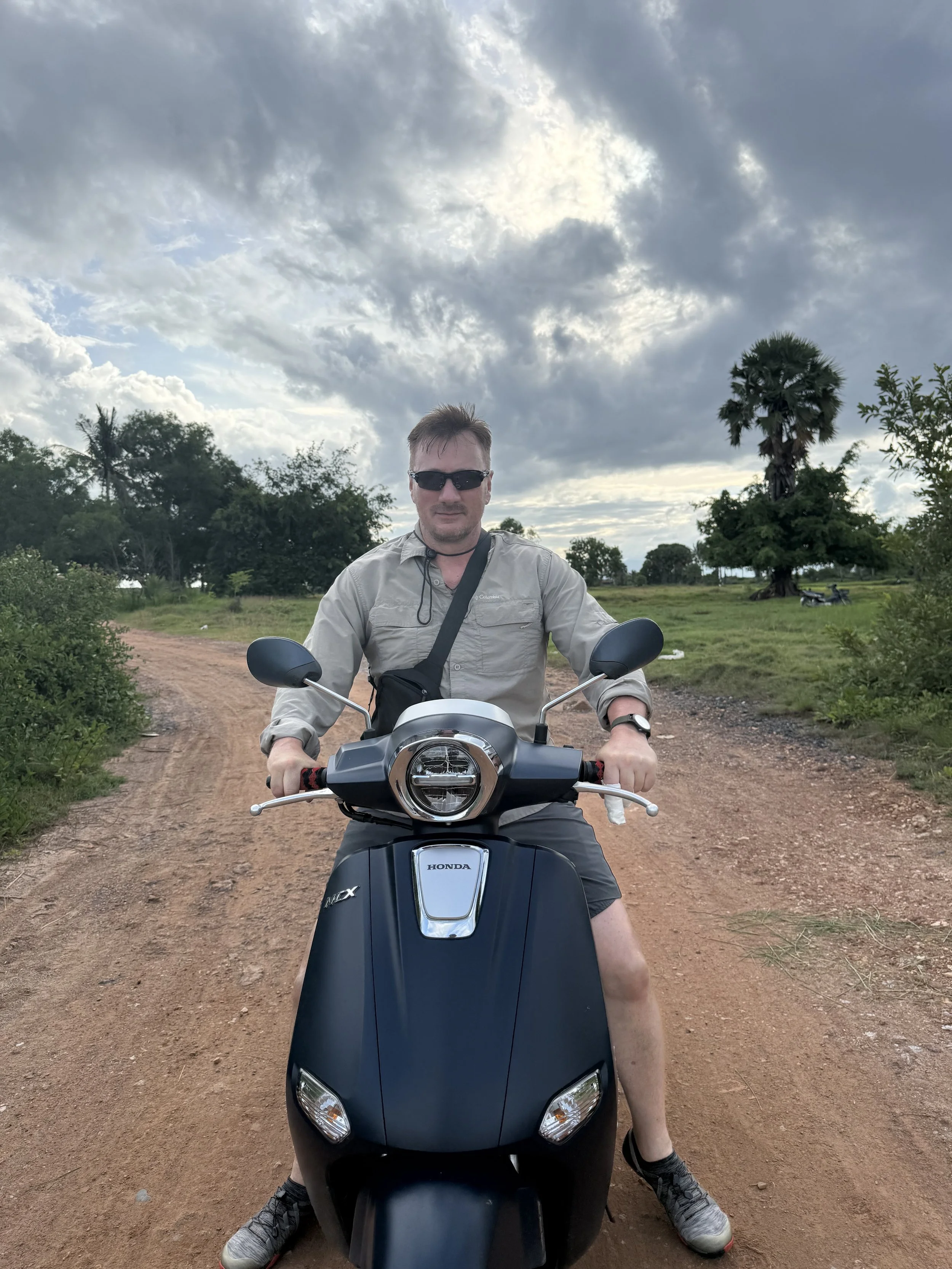
One of our favorite places is Deli’s Kep, owned by a friend of ours. Every couple of days, Kea and I will hop on our little Honda scooter and ride down for pastries or a couple of loaves of freshly baked French bread.
It's a wonderful place to sit near the sea and have something to eat without spending a fortune.
There are more upscale options around Kep as well, including restaurants and resorts catering to Western visitors. We've enjoyed those too, although naturally you'll pay more.
But some of my favorite experiences have involved tiny local food stands.
Kea has introduced me to places I probably would have driven straight past on my own.
We've eaten from a pizza truck.
We've tried little Khmer food stands.
And one of my favorites is incredibly simple: little pancakes made fresh in front of you with Nutella and nuts.
Nothing fancy.
But sitting outside in Cambodia eating a warm Nutella pancake from a roadside vendor is exactly the kind of experience I came here for.
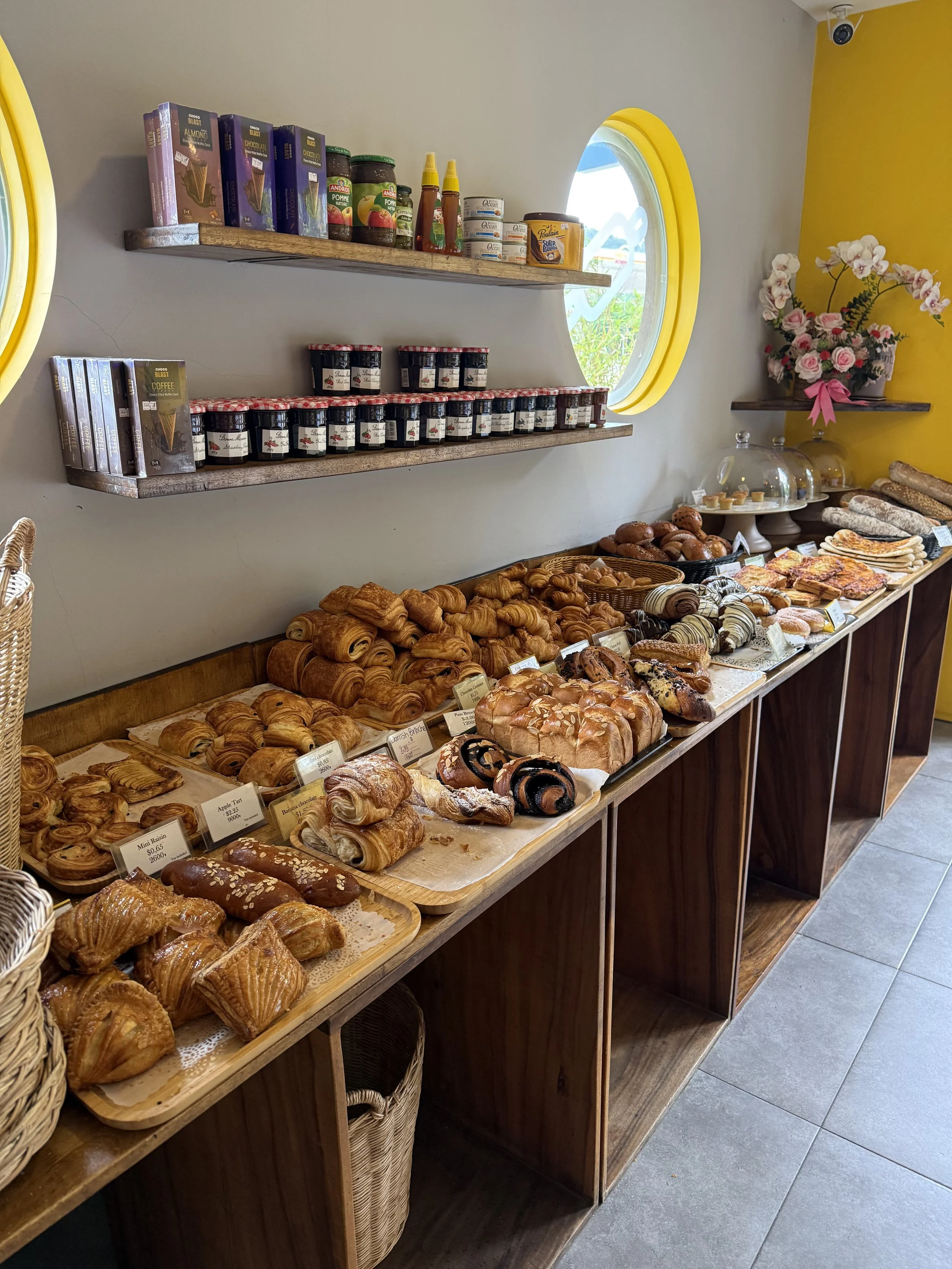
The fabulous selection of French pastries at Deli’s Kep
The Kep Crab Market
I can't write about Kep without talking about the Crab Market.
It is one of the most phenomenal places I've experienced when it comes to fresh seafood.
Kep is famous for its blue swimmer crab, traditionally paired with fresh Kampot green pepper. At the market, crabs are kept alive in baskets in the water until they're sold.
We generally try to get there around 7:30 in the morning.
That's when we've found some of the best selections.
You'll see beautiful whole fish, including red snapper, along with crab and some absolutely incredible prawns.
We buy prawns all the time.
Then we'll bring everything home, fire up the grill outside and make an evening out of it.
We'll invite people over.
We'll share some food.
Kea is an excellent cook.
Dinner isn't always just dinner anymore.
It becomes a social occasion.
There's something wonderfully simple about going to the market in the morning, choosing your seafood, bringing it home and grilling it outside with people you enjoy being around.
Fresh food.
Good friends.
Kea cooking.
Something on the grill.
And nowhere we particularly need to be.
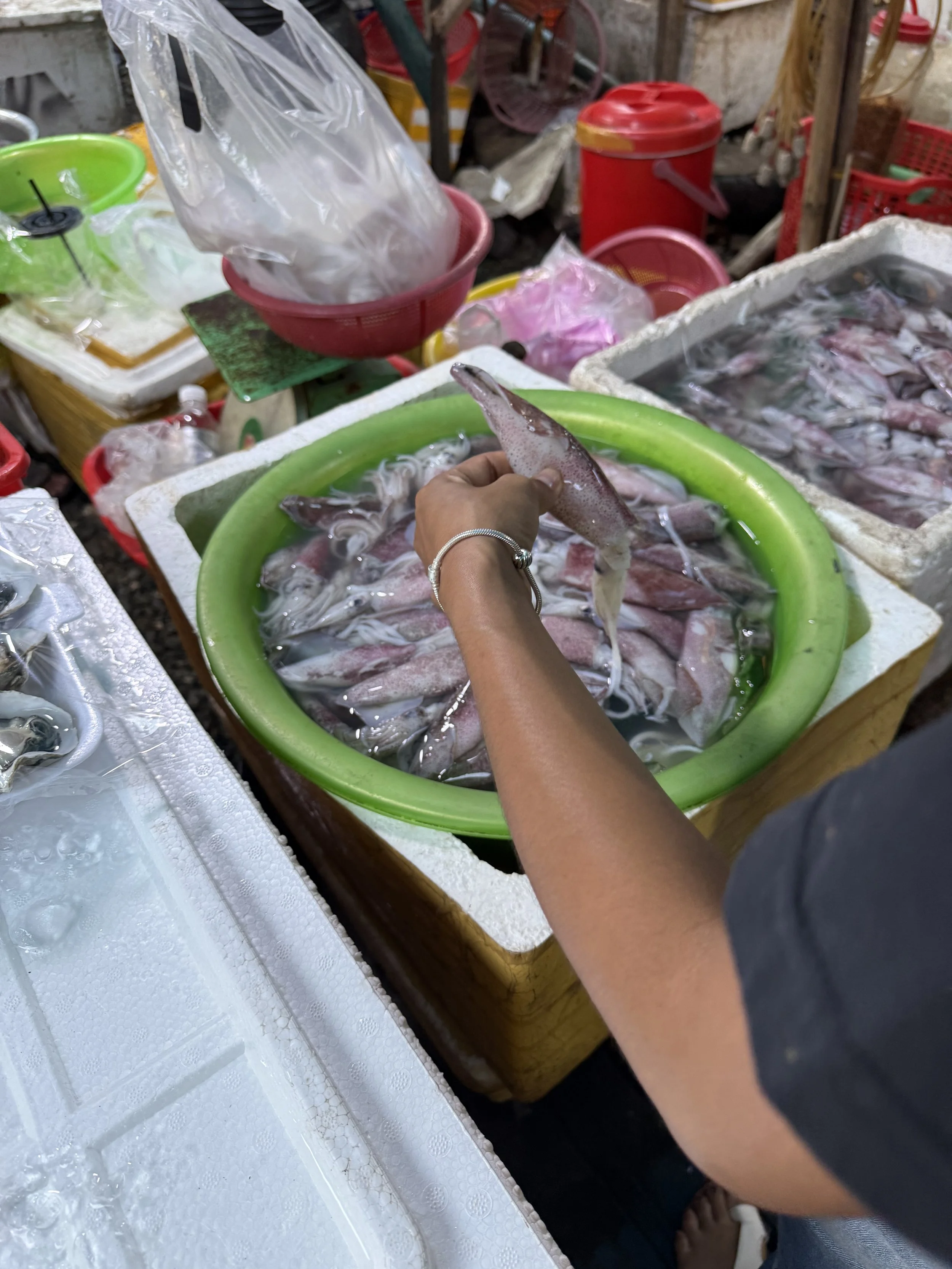
Kea inspecting today’s freshly caught prawns from the Gulf of Thailand at the Kep Crab Market
Sometimes I Just Get on My Bicycle and Ride
One of my favorite things to do in Kep costs essentially nothing.
I get on my bicycle.
We bought a couple of used Japanese bicycles that look as though they might be 50 years old.
They're nothing fancy.
I love them.
Sometimes we'll ride toward Angkol Beach. Other days I'll just wander through the streets of Kep with nowhere particular to go.
That's part of why I wanted to live here.
There isn't tremendous traffic during much of the week, and I can simply ride, get some exercise and enjoy where I live.
Our house is near government buildings and a park. In the evenings, groups of local women come out and exercise together.
Then, after exercising, they'll have a big feast.
I'm not entirely sure the feast doesn't undo some of the exercise, but I admire the system.
When I ride through, people smile.
They wave.
And I wave back.
I'm just the American guy riding around Kep on an ancient Japanese bicycle.
But people recognize me now.
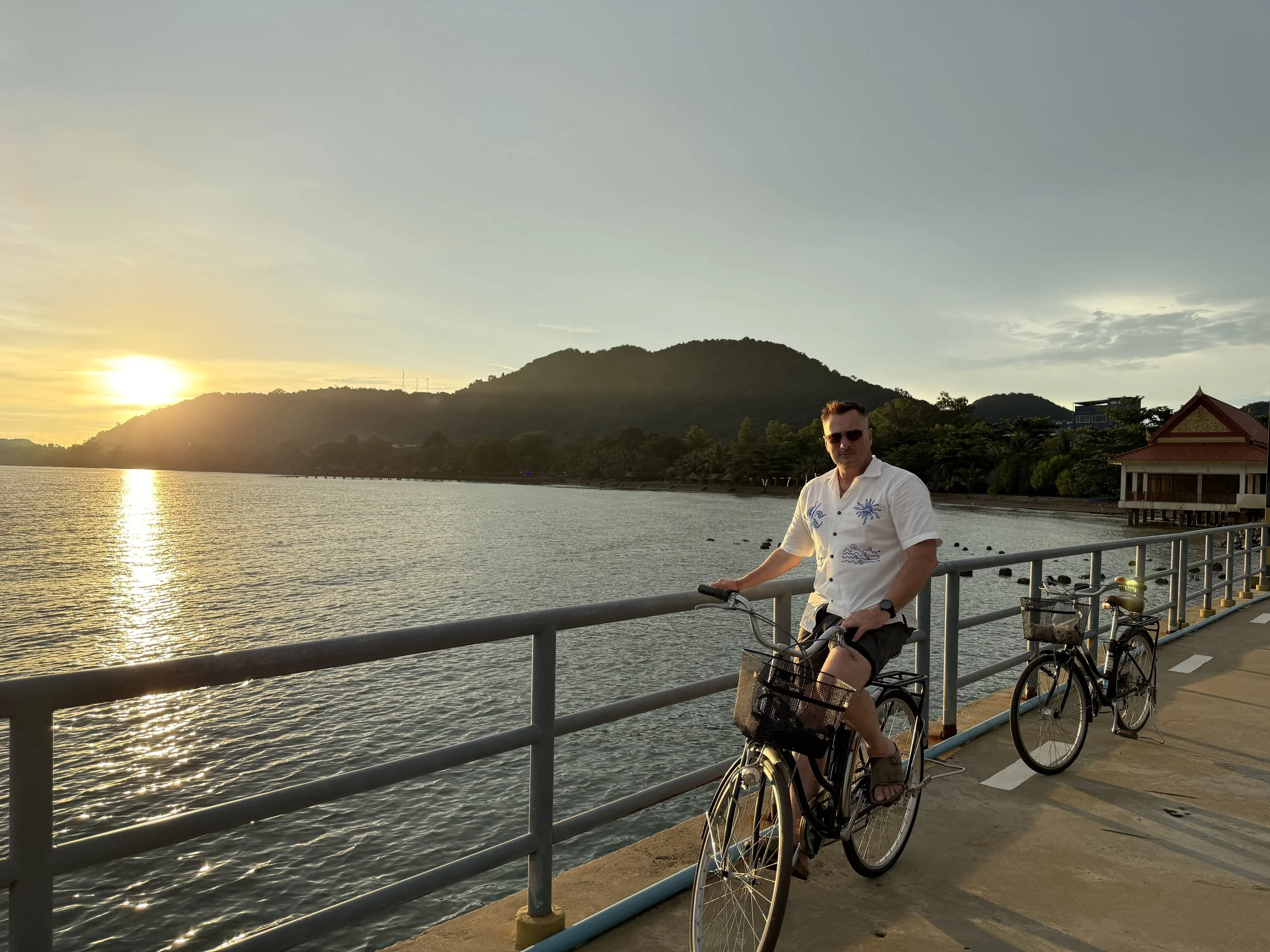
Enjoying sunset from Kep Pier in the center of Kep.
A Hammock, a Hut and a Cambodian Sunset
Another one of our favorite things is going down toward Angkol Beach.
There are simple huts along the water where you can spend hours doing essentially nothing.
And that's the point.
Kea and I will find a hut, climb into a hammock and sit looking out over the water.
You can buy drinks and food there, or bring some of your own food and pay a small fee to use the hut.
Then you stay.
Nobody seems particularly concerned about how long you've been sitting there.
You talk.
You eat.
You watch the fishing boats.
And eventually the sun begins dropping toward the Gulf of Thailand.
The sunsets can be spectacular.
There are no tickets.
No reservations.
No expensive beach club.
No schedule.
Just a hut by the sea, a hammock and someone you love sitting beside you.
Before moving here, I might have considered that doing nothing.
Now I'm beginning to think that's exactly the point.
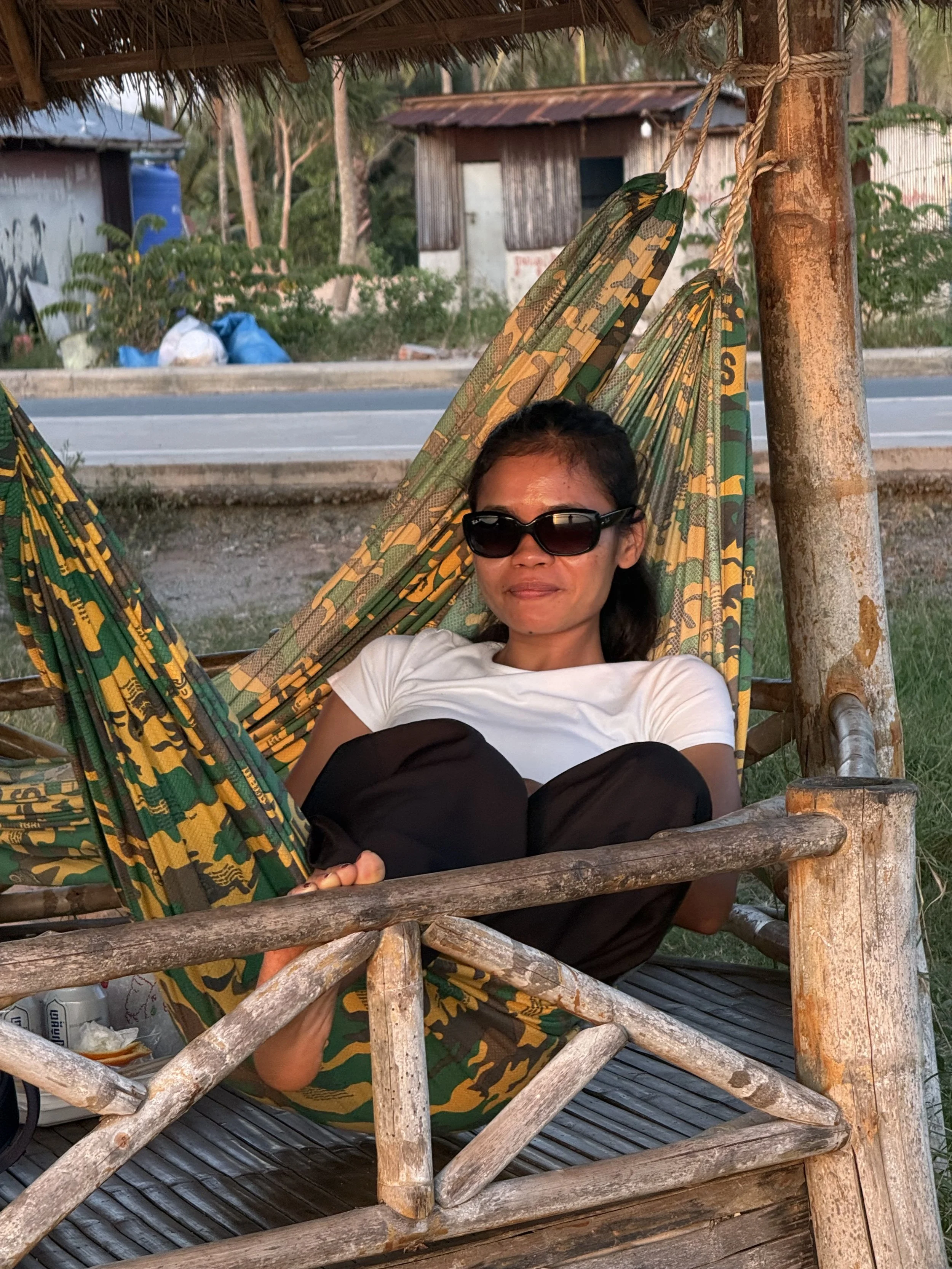
An evening of sunset watching from her hammock in a hut on Angkol Beach
Even the Cows Know Me Now
Maybe one of the strangest signs that Kep has begun to feel like home has nothing to do with people.
It's the animals.
There are Brahman cattle wandering through our neighborhood.
There are street dogs I see regularly.
When I first arrived, they were simply part of the scenery.
They're not anymore.
I can pick up a palm fruit, walk into the street and some of the cattle will come right up to me.
They recognize me.
A few will even stand outside my gate and wait because they've apparently figured out that the American guy inside sometimes comes out with something good to eat.
The street dogs recognize me too.
It sounds insignificant.
But I love it.
The people at the gas station recognize me.
The women exercising in the park wave when I ride past.
My neighbors know me.
The dogs know me.
And apparently even the cows know where I live.
Maybe that's when a foreign country starts becoming home.
Not when you get your visa.
Not when you sign a lease.
Not when you open a bank account.
Maybe it's when you walk outside your gate and something recognizes you.
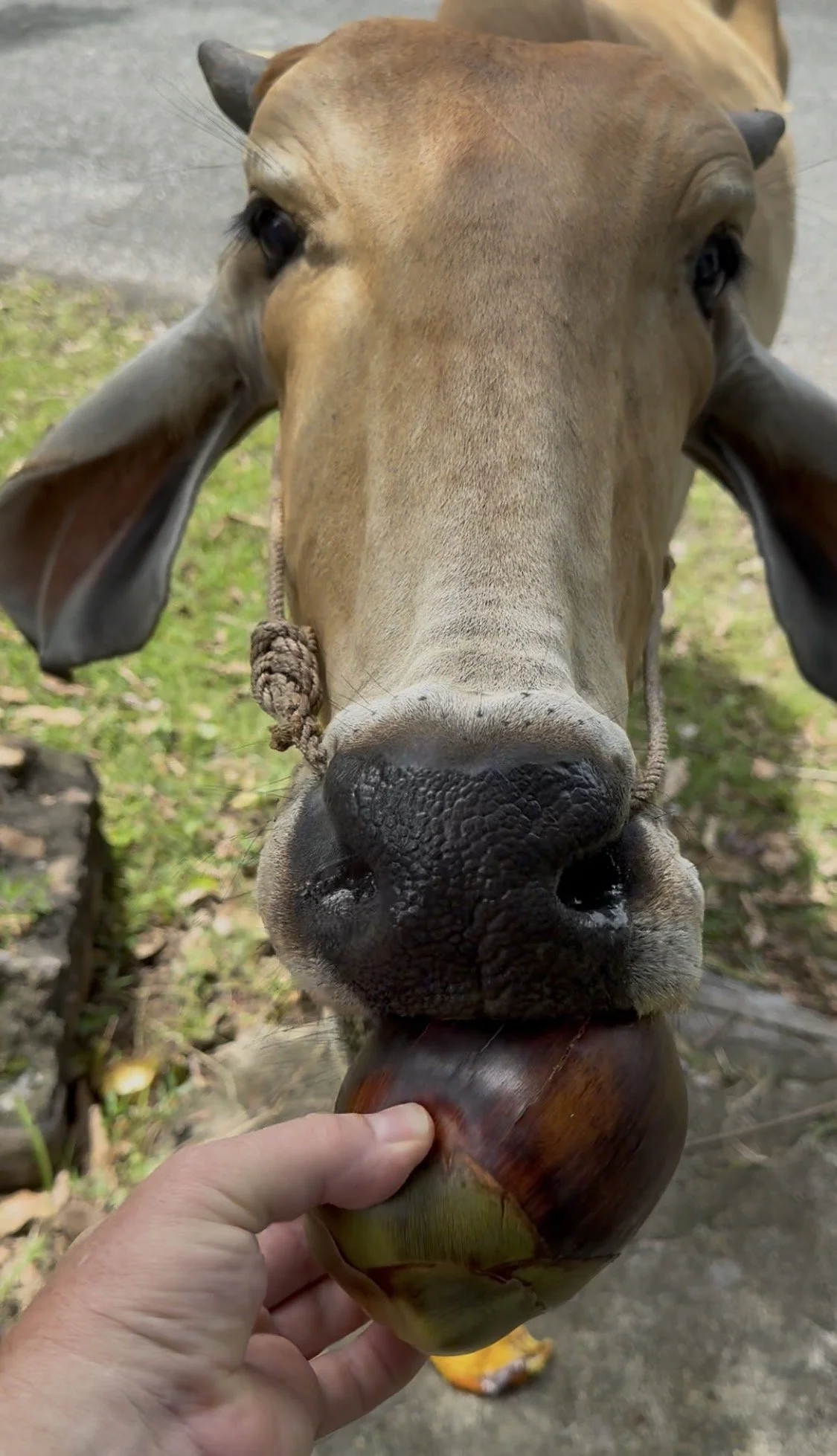
My neighbor “Ethel” the brahma cow eating palm fruit from my hand.
The Morning Four Police Officers Walked Through My Gate
Living in a small community also means people tend to know who lives where.
I learned that one morning around 8:00.
Kea had gone out to get pastries. I had just gotten out of bed and was still wearing the shorts I'd slept in when I heard voices outside.
"Chum reap suor. Sous-dey."
Hello.
I looked out the window.
Four Cambodian police officers were coming through my gate.
When you're a foreigner living in another country and four police officers unexpectedly show up at your house at eight in the morning, several thoughts go through your head.
Mine was pretty simple:
I'm going to jail.
I had absolutely no idea what I'd done, but apparently I'd done something.
Fortunately, the truth was considerably less dramatic.
They were there regarding my registration as a foreign resident.
I already had my one-year Cambodian retirement visa, but they wanted to see my passport, visa and lease and verify where I was living.
My Khmer wasn't exactly ready for an immigration interview, so I called Kea and asked her to come home and help translate.
Once I understood what was happening, the whole experience became almost comical.
They were extremely friendly.
And before leaving, they told me that if I ever had a problem, I could simply go next door.
My neighbors happen to be police officers.
That's Kep.
Even the police know a guy.
"You're Going to Lose a Kidney"
Before I moved here, people warned me about Cambodia.
One person told me I'd lose a kidney.
Another warned me about being kidnapped.
That simply hasn't reflected my personal experience in Kep.
That doesn't mean crime doesn't exist.
Cambodia is currently under a U.S. State Department Level 2 advisory, meaning Americans are advised to exercise increased caution. The current advisory cites crime, unrest and unexploded ordnance, with additional specific cautions for certain areas; it specifically calls for increased caution in Phnom Penh because of crime.
I still use common sense.
I'm aware of my surroundings.
I'm careful with my belongings.
But I'm not living in fear.
Kea and I have walked home from the pier around nine o'clock at night without feeling unsafe.
I ride my bicycle around town.
We take the scooter out.
We go to markets.
We interact with people throughout the community.
And for the record:
I still have both kidneys.
The Cambodia some people imagined when I announced I was moving here and the Cambodia I actually wake up to every morning are very different.
Moving here required me to be cautious.
It didn't require me to be afraid.
But I Don't Speak Khmer
My Khmer is still very limited.
Fortunately, Kea speaks Khmer and English, and I don't want to underestimate how much easier she has made my transition.
Without her, living here would definitely be more challenging.
But impossible?
I don't think so.
In many shops, restaurants and resorts, you'll find people who speak at least some English.
And technology makes everything considerably easier.
Google Translate has become incredibly useful.
Sometimes you don't even need that.
Show someone a picture.
Point.
Smile.
Figure it out.
People I've encountered in our community have generally been incredibly patient and accommodating.
I'm also trying to learn some Khmer because this is my home now, and making the effort matters.
You don't necessarily have to understand every word someone says to understand each other.
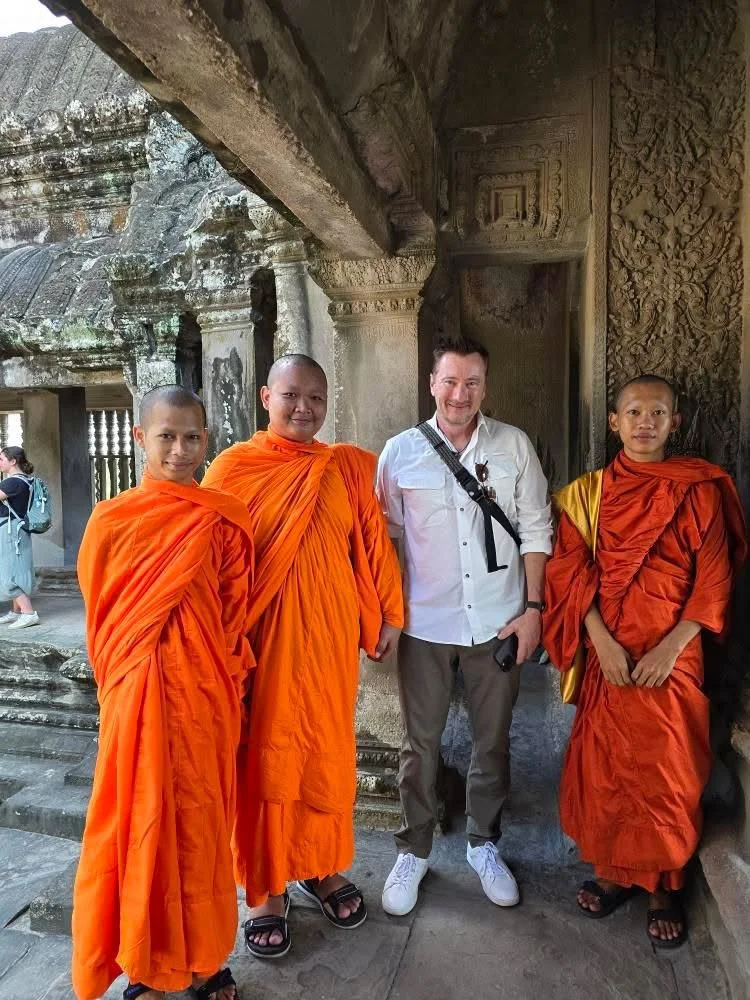
The monks of Angkor Wat practicing their English with me in Siem Reap.
Paying for Things Is Surprisingly Easy
Money was another thing I expected to be more complicated.
In everyday life, we use Cambodian riel, U.S. dollars and digital payments.
Once I opened my Cambodian bank account, QR payments became incredibly convenient. ABA's current QR system supports both Cambodian riel and U.S. dollar transactions and operates through Cambodia's Bakong/KHQR payment infrastructure.
QR codes are everywhere.
Restaurants.
Stores.
Small street vendors.
Scan.
Pay.
Done.
There are ATMs around Kep as well, and in my experience accessing cash hasn't been difficult.
Even filling the car has become personal.
I know the women who work at the gas station where I regularly fill the Prius.
I pull in.
They recognize me.
I recognize them.
We say hello.
They fill the car.
I pay.
I'm on my way.
It's another tiny interaction that makes Kep feel like home.
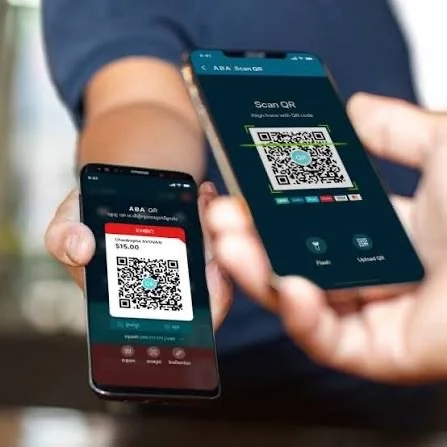
How Cambodia pays through QR codes on ABA.
When Kep Doesn't Have It, Kampot Probably Does
Kep is small.
There are things you're simply not going to find easily.
If we want a larger Western-style grocery store, a wider selection of restaurants or certain services, we'll go to Kampot.
I've even gone there for dental work—which deserves an article of its own because my experience with dental care in Cambodia has been surprisingly good.
There is a small local hospital near our house in Kep, but for many services, living in a small town means traveling somewhere larger.
Getting products delivered is surprisingly easy too.
We've used J&T to have things like cat food and cat litter sent down from Phnom Penh. Some deliveries have arrived remarkably quickly.
Again, you adapt.
You learn what Kep has.
You learn what requires Kampot.
You learn what can come from Phnom Penh.
And eventually it stops feeling unusual.
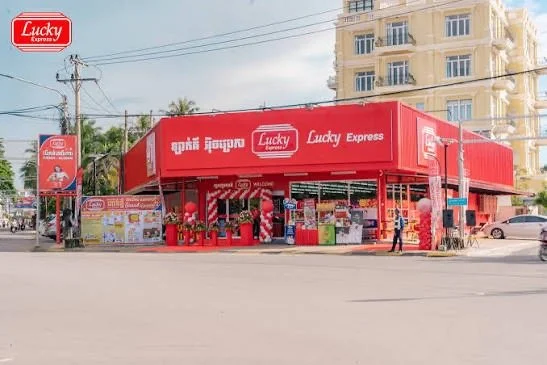
The western grocery store Lucky in Kampot. If you want western products you can probably find it here.
Now for the Things That Drive Me Crazy
I've probably made it obvious that I love Kep.
But let's not turn this into a tourism commercial.
There are things about living here that absolutely drive me crazy.
Finding a House
Finding a house in Kep can be difficult.
There isn't a huge inventory of properties listed online.
Facebook Marketplace can help, but sometimes the best method is remarkably low-tech:
Get in the car and drive around.
Our current house came through word of mouth.
The house we're moving into?
We found it while driving around.
Housing in Cambodia deserves an entire article of its own, so I'll save the details for later.
Shopping Can Become a Scavenger Hunt
Need something specific?
Research it.
Try one store.
Try another.
Ask somebody.
Then someone tells you:
"Oh, I know somebody who has that."
And you're off again.
Most things can eventually be found.
The challenge is figuring out where they're hiding.
The Driving Is Insane
Nothing prepared me for driving in Cambodia.
Nothing.
There are traffic rules.
And then there is the way traffic actually works.
You'll see four or five people traveling on a moto.
You'll see things being transported on motorcycles that I would have assumed required a pickup truck.
If something can be balanced on a moto, attached to a moto, pulled behind a moto or somehow carried by the people riding the moto, eventually you're probably going to see it coming down the road.
Traffic occasionally comes from directions my American brain doesn't expect traffic to come from.
Somehow, everyone else seems to understand the system.
I'm still learning it.
Never Completely Trust Google Maps
One day, Google Maps gave us a route.
We followed it in our 2011 Toyota Prius.
That was a mistake.
The road gradually deteriorated until calling it a road became increasingly generous.
Mud.
Deep ruts.
Uneven ground.
At some point I realized Google Maps had essentially turned our Prius into an off-road vehicle.
I'm going to include a photograph because words really don't do it justice.
Let's just say that when Toyota designed the Prius, I'm fairly certain this wasn't what the engineers had in mind.
And Then There Are the Creatures
Cambodia has plenty of wildlife.
Some of it I love.
Some of it I'd prefer to admire from a considerable distance.
Insects, snakes, reptiles and all kinds of creatures are simply part of living in a tropical country.
That's another article all by itself.
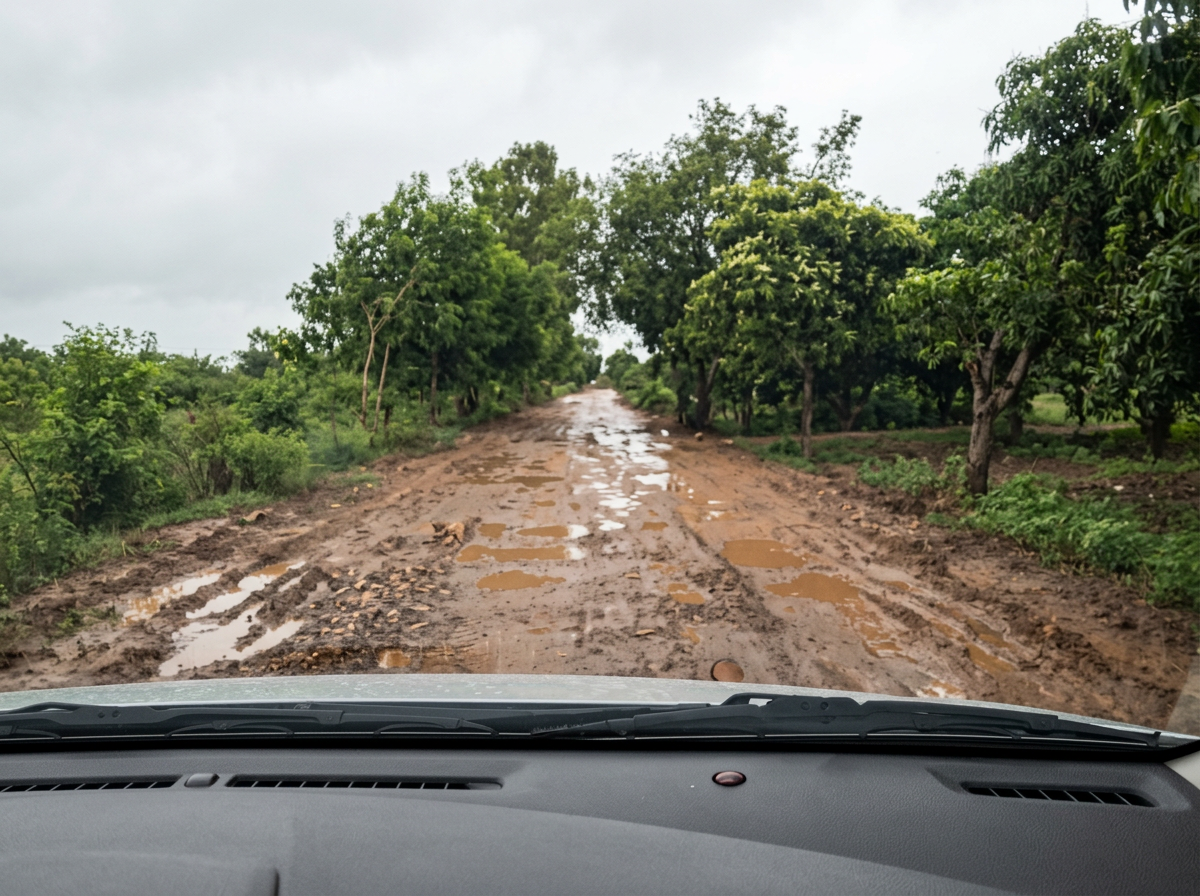
Thanks Google Maps. The mud road Google took us through in Kep/Kampot.
It's Hot. Really Hot.
I lived in Pennsylvania for roughly 30 years.
I've spent time in Florida.
Neither prepared me for Cambodia.
The combination of tropical heat, humidity and prolonged rain is something you have to experience.
During monsoon season, it can rain and rain and rain.
Then the sun comes back out and the heat returns.
April can be incredibly hot.
For me, some of the most enjoyable weather comes during Cambodia's dry-season months, particularly around January through March.
There's something wonderful about sitting near the Gulf in shorts while people back home are shoveling snow.
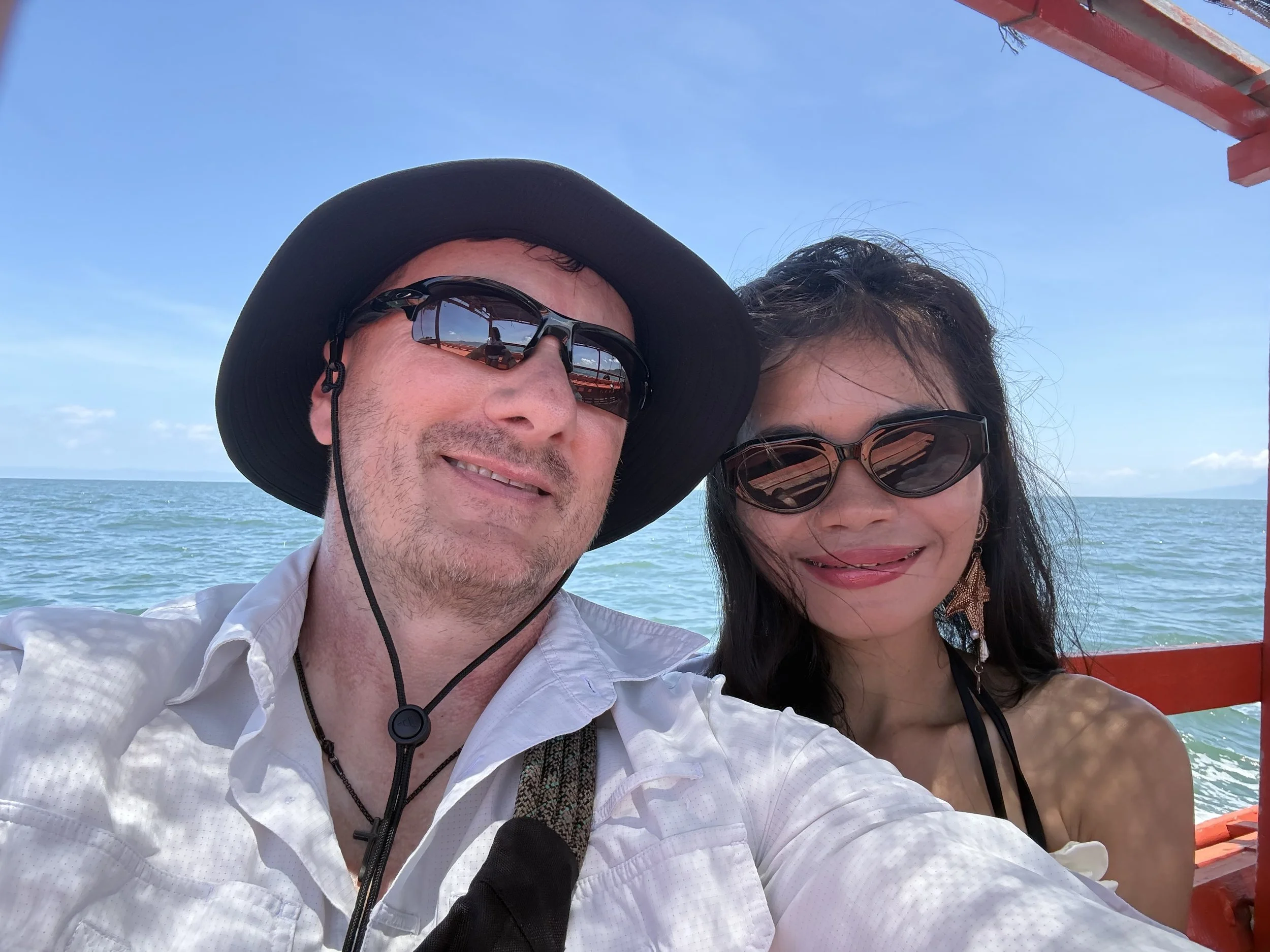
On a hot day, it’s nice to take a ferry to Rabbit Island from the Kep Pier
Kep Goes to Bed Early
If you're looking for nightlife, I'll save you some time.
Kep probably isn't your town.
By around nine o'clock, things can get very quiet.
There are restaurants and places to have a drink, but this isn't a nightlife destination. Even Cambodia's official tourism information describes Kep as having almost no nightlife.
Kampot has considerably more going on.
Other Cambodian cities offer considerably more.
Kep goes to sleep.
And I'm completely fine with that.
I spent much of my career in a very public profession.
I interacted with people all day, every day, for decades.
At this point in my life, I don't need to be surrounded by people constantly.
I've met Westerners here. I know restaurant owners. I encounter expats and travelers at restaurants and grocery stores.
One day at Lucky Supermarket, I heard two guys speaking English.
One was from Texas.
The other was from California.
If I wanted to seek out a bigger expat social circle, I probably could.
I just don't need one.
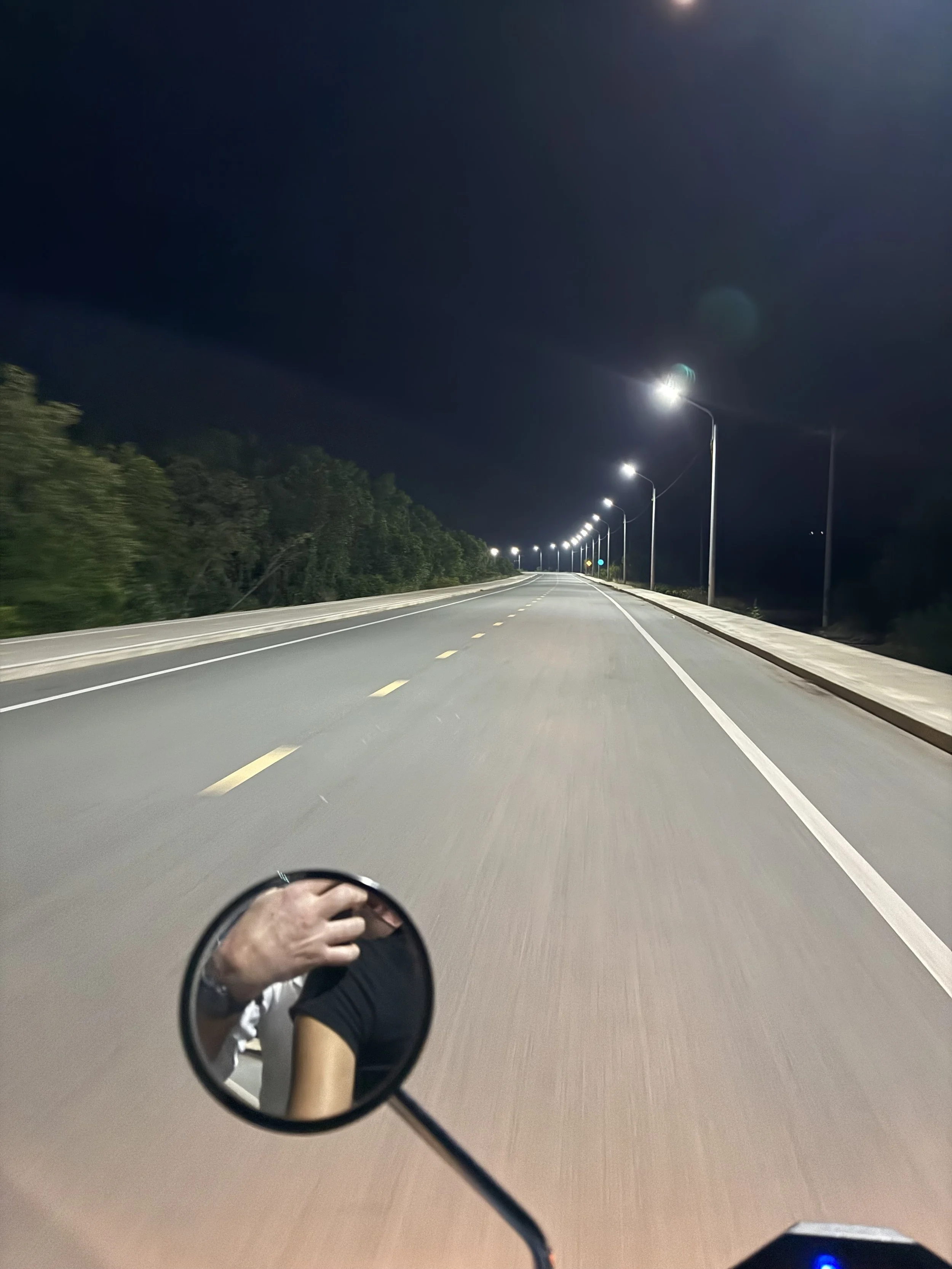
Coastal road near Angkol Beach at 8 pm. Yes; empty!
Could You Live Here Without a Car?
Yes.
But you'll need to adjust.
I have a Prius, a Honda scooter and our ancient Japanese bicycles.
Visitors can walk around parts of Kep or use tuk-tuks and ride-hailing services when drivers are available.
Transportation options become thinner later at night.
Then again, by nine o'clock there isn't exactly a raging nightlife scene you're desperately trying to get home from.
For longer-term living, I personally like having my own transportation.
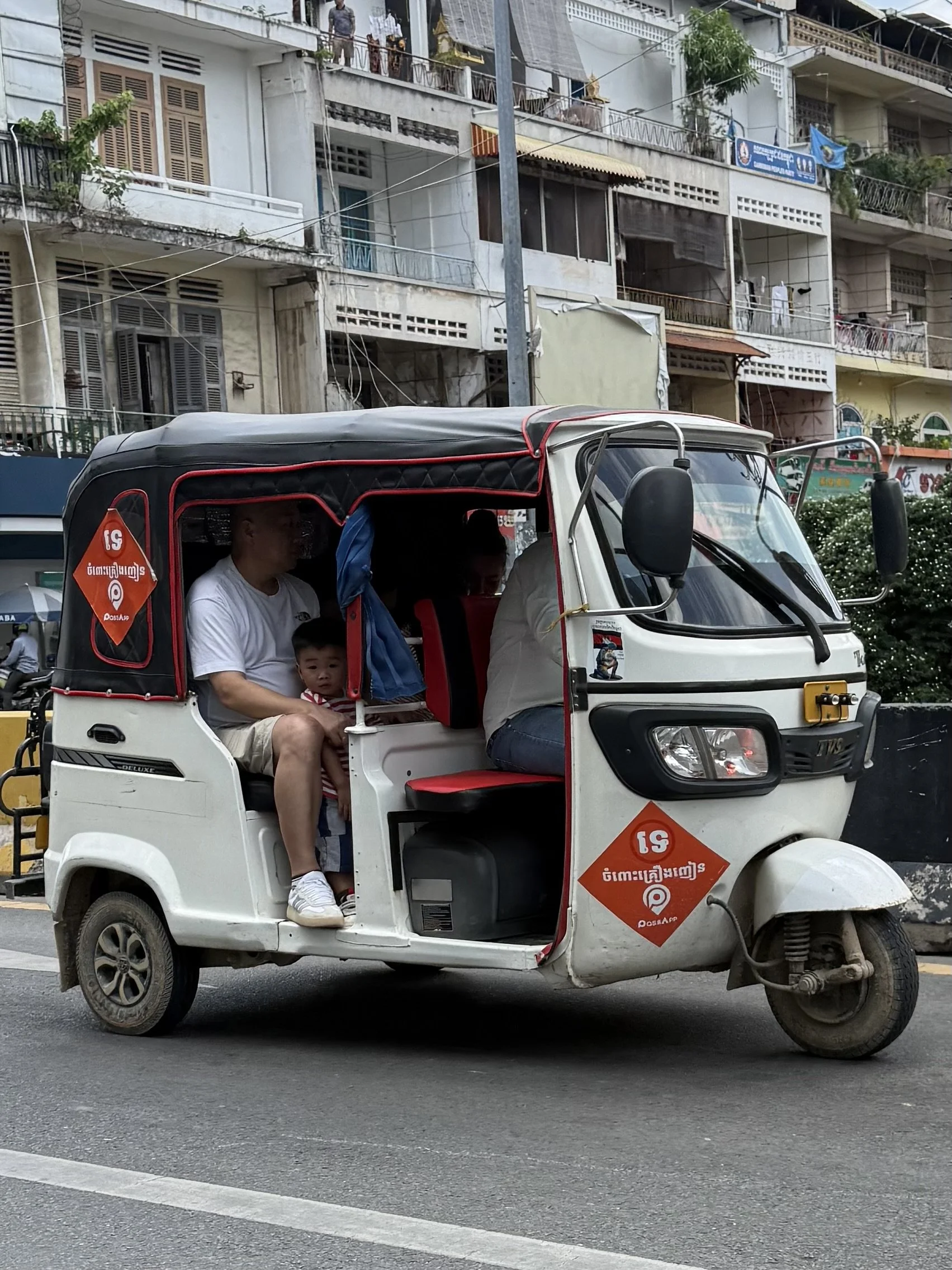
PassApp tuk tuk in Cambodia
Internet, Electricity and Water
Could I actually stay connected while living in a small Cambodian seaside town?
Absolutely.
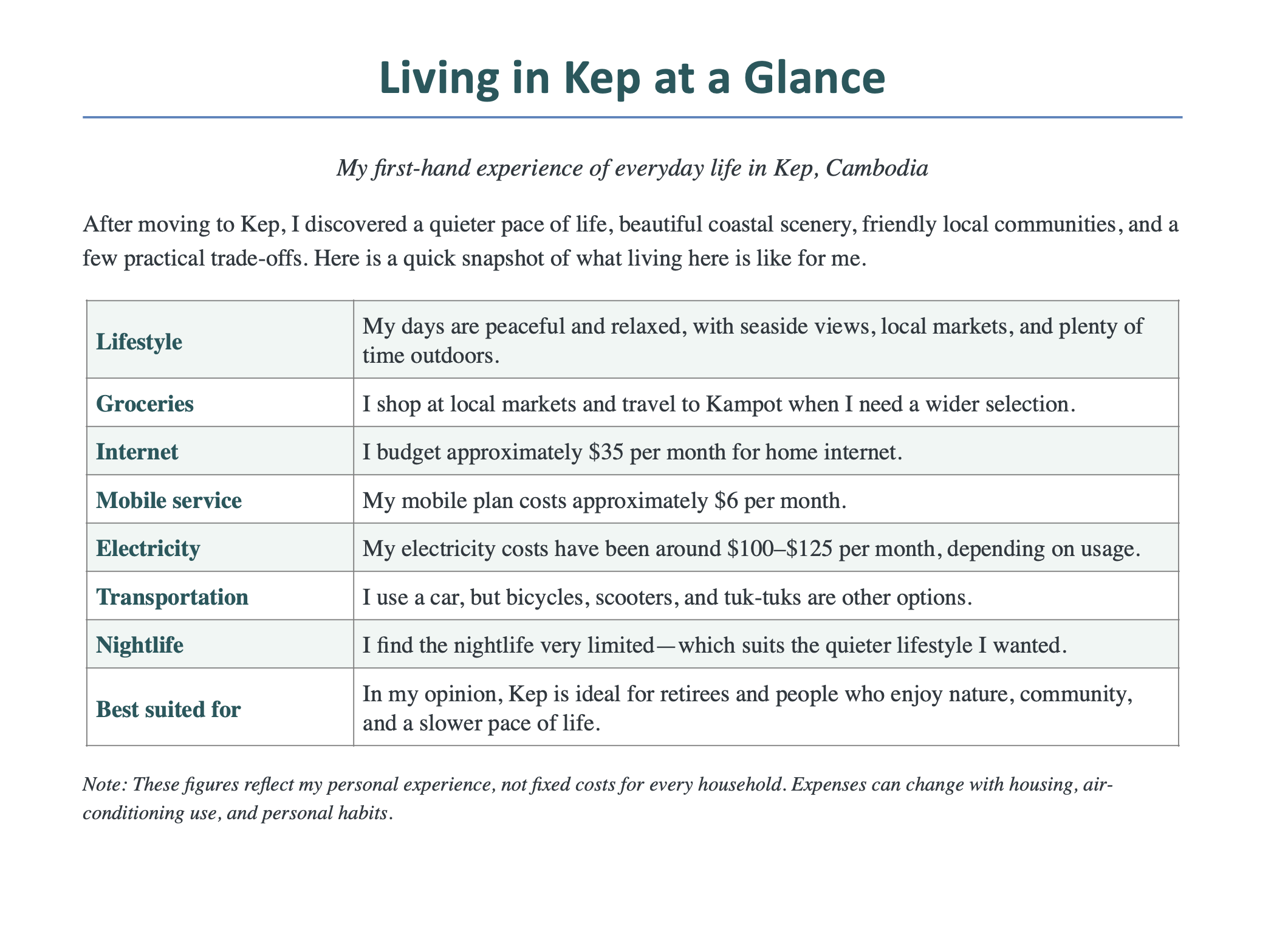
I pay around $35 a month for upgraded home internet.
Kea and I stream movies.
We use our phones.
I work online.
I listen to music.
I video chat with my parents back in the United States.
And overall, the connection has been very good.
My Cambodian Metfone service costs me around $6 a month, which I use alongside my American cell service.
Electricity is a different story.
At our current house, we only have air conditioning in the bedroom, and I run that split unit quite a bit—usually around 25°C during the day and 22°C at night.
Our electricity bill has generally been around $100 to $125 a month.
We're moving into a considerably larger house with five air conditioners.
Ask me about that electric bill in a few months.
I'm slightly terrified.
Power outages happen too. In my experience they're usually brief, but they can occur several times during a week.
We've also experienced a water interruption.
Fortunately, our house has a large rooftop storage tank, so we switched over to that until service returned.
Water itself has been extraordinarily inexpensive compared with what I was accustomed to paying in the United States.
Cooking gas is inexpensive too. We use a refillable cylinder for our stove, and one lasts us for months.
Eventually I'll publish a complete article showing what it actually costs us to live here.
If you would like to visit Kep before you make a decision, I suggest booking a hotel or resort through Booking.com. They have a wide selection of accommodations to fit every budget.
And Then You Look Around
For all the practical things I've written about, sometimes I forget the most obvious reason I chose Kep.
It's gorgeous.
There are mountains behind my house.
Kep National Park rises above town.
There's a pagoda above where I live, and the sounds from it have become part of the soundtrack of my life.
I hear prayers.
I hear monks chanting.
I hear music from funeral services.
Sometimes I don't understand a single word.
I don't need to.
It's simply part of living here now.
Then I can get on my scooter or bicycle and head toward the water.
Beaches.
Fishing boats.
Hammocks.
Islands in the distance.
And incredible sunsets over the Gulf of Thailand.
Sometimes Kea and I will simply sit there watching the sun disappear.
And I still occasionally think:
I actually live here.
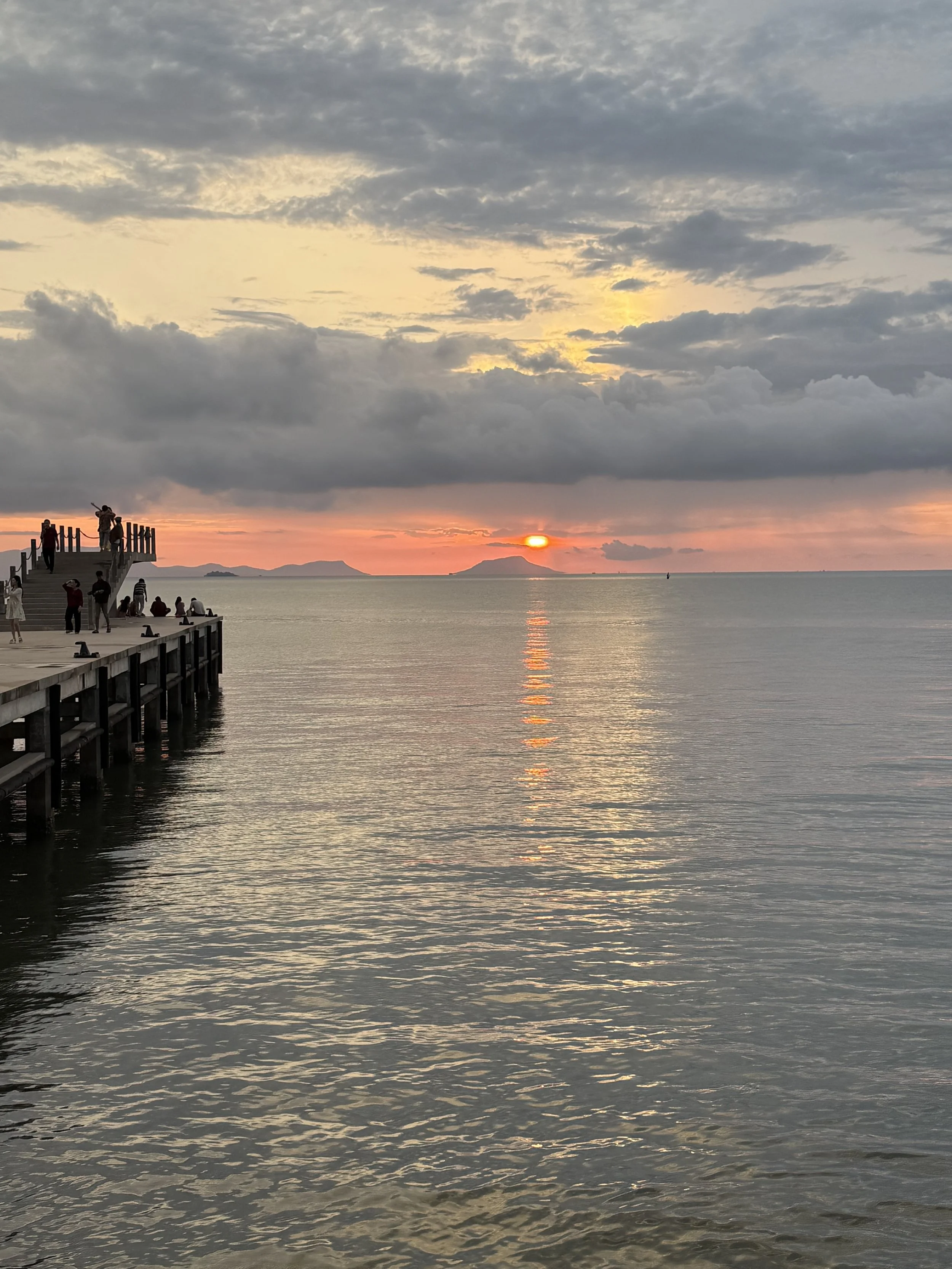
Sunset From Kep West Resort
Quiet Doesn't Mean Cut Off
Kampot is nearby when we need more shopping, restaurants or services.
Phnom Penh is reachable by car.
Sihanoukville and Cambodia's islands are within reach too.
Kea and I can even turn Koh Rong into a weekend getaway. Current transport listings show Kampot-to-Koh Rong connections taking roughly two to several hours depending on the service and routing, although schedules and weather can affect the trip.
And Koh Rong has some of the most beautiful beaches I've ever seen.
That's the balance I wanted.
I didn't want to live in a major city.
But I didn't want to disappear from civilization either.
Kep gives me both.
Kep Is Changing
I don't know what Kep will look like five or ten years from now.
Development is happening.
More people are discovering this part of Cambodia.
Maybe Kep will remain the sleepy seaside community I've gotten to know.
Maybe it will change considerably.
Part of me hopes Kep prospers.
And part of me selfishly hopes nobody discovers it at all.
Because right now I've found something that's becoming increasingly difficult to find.
A beautiful place where life is still allowed to move slowly.
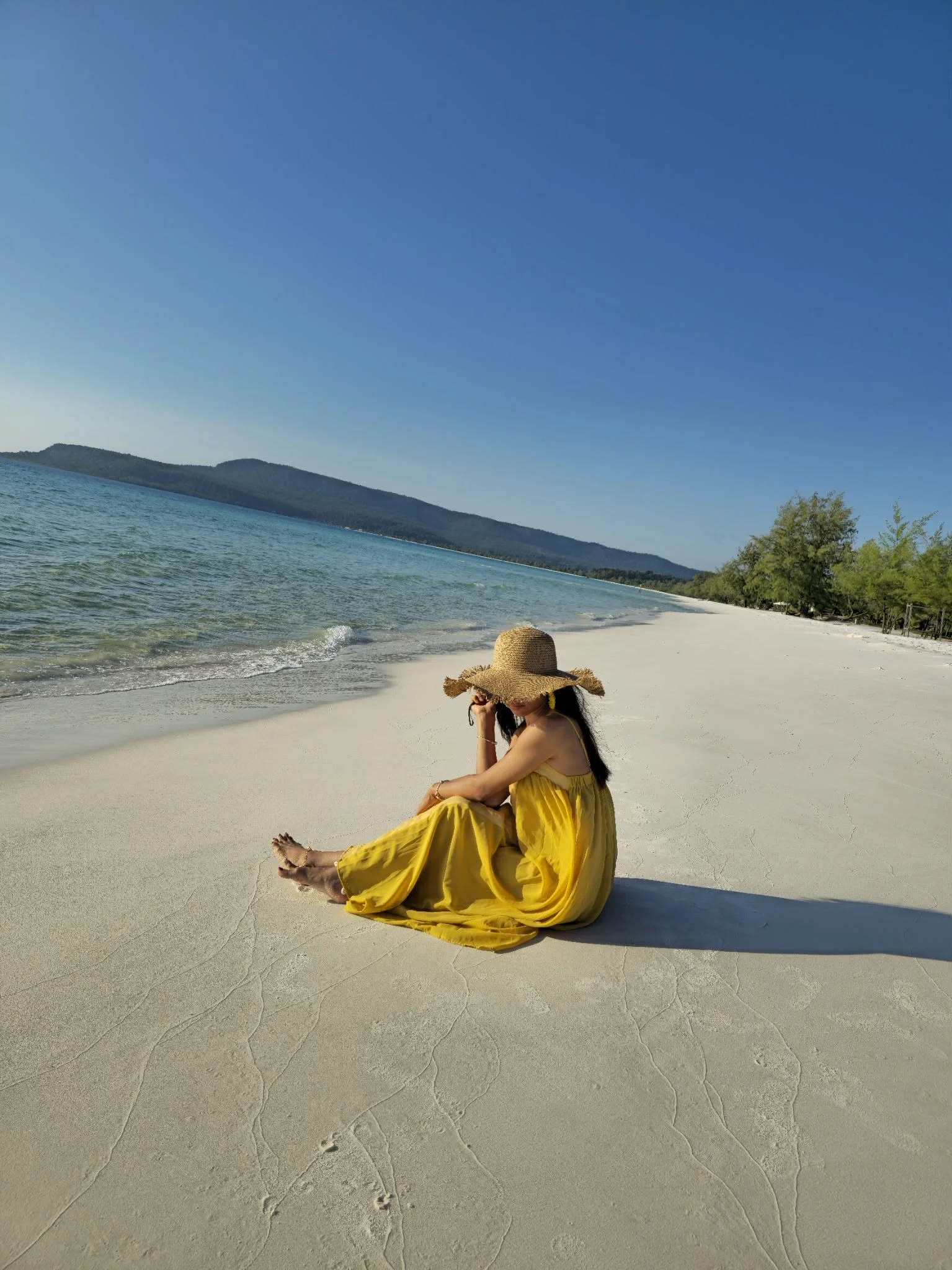
Kea posing on Long Beach. The best beach on Koh Rong Island. Less than a three hour ride from Kep, Cambodia
Is Kep Right for You?
I would choose Kep again in a heartbeat.
But I wouldn't recommend it to everybody.
If you need constant entertainment, Kep probably isn't for you.
If you want clubs, bars and nightlife several nights a week, Kep definitely isn't for you.
If you need hundreds of restaurants, major shopping centers and activities available whenever you leave your house, there are other places in Cambodia that may suit you better.
But if you want to ride a bicycle in the morning...
Walk along the water...
Look at the mountains...
Watch incredible sunsets...
Get to know the people at your market...
And become part of a small local community rather than constantly being entertained by one...
Then Kep might make considerably more sense.
It certainly does for me.
There are places in Cambodia where I could have more conveniences.
But I've learned something about convenience.
More convenience also gives you more opportunities to spend money.
I'm fortunate in retirement. I have a pension and enough breathing room in my budget that I don't have to count every dollar.
But that doesn't mean I want to waste money.
Kea and I still talk about what we're spending.
We'll spend around $50 at the market and come home with food that can last us several days.
We'll cook.
We'll grill.
We'll invite somebody over.
I don't feel like I'm depriving myself.
Quite the opposite.
I'm discovering that having more things available to buy doesn't necessarily improve my life.
Sometimes entertainment is getting on my bicycle.
Sometimes it's taking the scooter down to the water with Kea.
Sometimes it's grilling the prawns we bought that morning.
Sometimes it's sitting in a hammock watching the sunset.
And sometimes it's walking outside carrying a palm fruit because there's a cow standing at my gate waiting for me.
Could I have more conveniences somewhere else?
Absolutely.
But I'm not sure I'd have a better life.
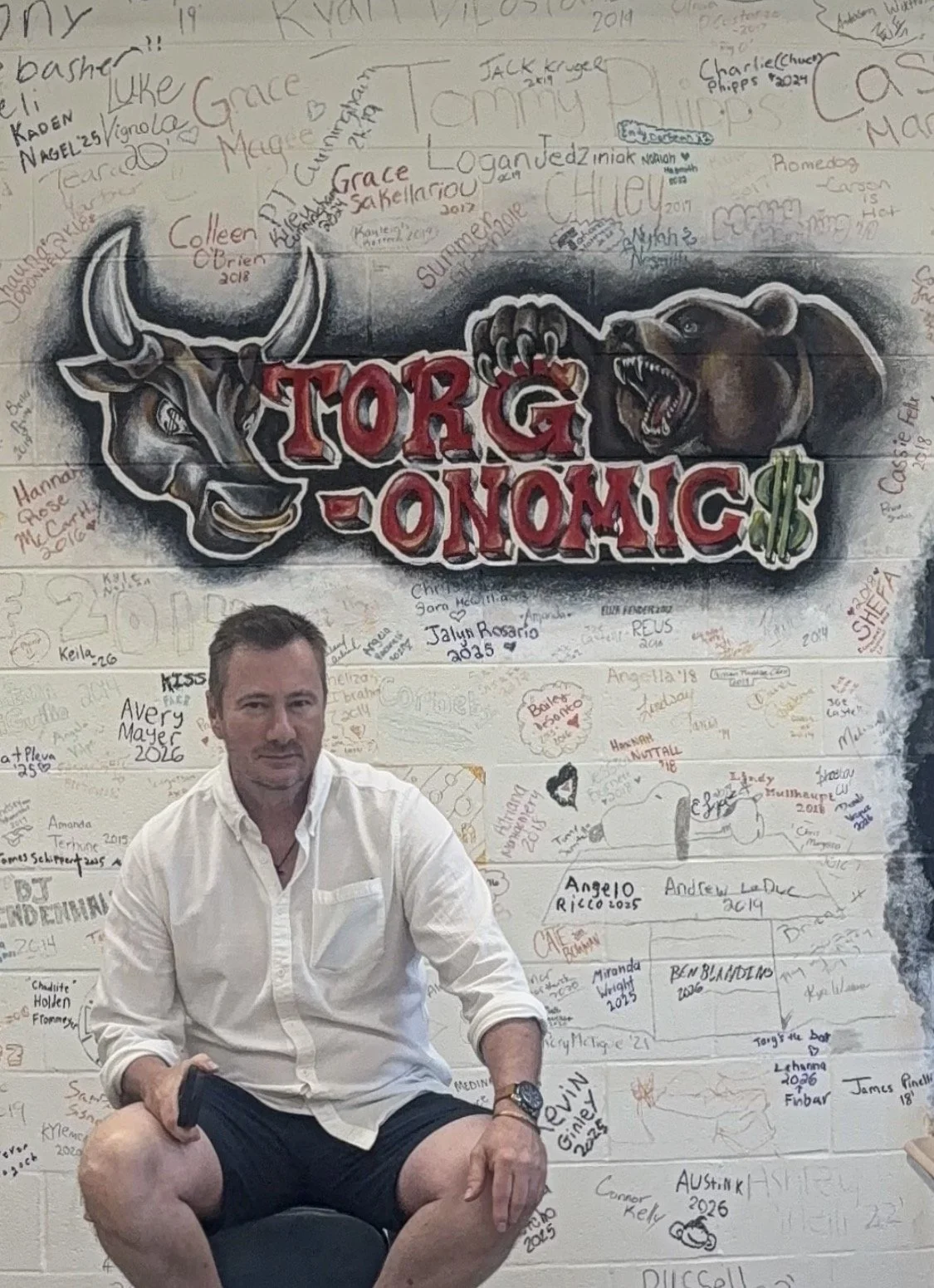
The last picture I took in my classroom before retiring. The names are those of my students who passed my economics class. A right of passage!
Finally, I Can Breathe
I lived a pretty chaotic life for a long time.
I spent 31 years teaching in a New York State public school.
It was a career I'm proud of.
But it was challenging.
For decades, my life ran on a schedule.
There was always somewhere I had to be.
Something I had to do.
Someone who needed something.
A bell was always about to ring.
Then I retired.
And eventually I ended up here.
Sometimes I'll stand outside my house in Kep and simply look around.
The mountains are behind me.
The breeze is blowing.
Maybe I can hear the monks chanting from the pagoda above my house.
Maybe there's a cow outside my gate waiting for a palm fruit.
Maybe Kea and I are getting ready to take the bicycles out or ride the scooter toward the water.
And sometimes I just stand there.
I take a deep breath.
And I realize:
I can breathe.
That's probably the simplest way I can explain what moving to Kep has done for me.
I feel healthier here.
I feel more relaxed.
Psychologically, I feel better.
I'm happier.
Life isn't perfect.
Cambodia isn't perfect.
Kep certainly isn't perfect.
There are days when the heat is brutal.
There are days when it won't stop raining.
There are things I can't find.
There are insects I'd prefer not to share my house with.
There are moments when I'm driving down a Cambodian road wondering what in the world the person on the motorcycle in front of me is doing.
And yes, sometimes Kep can be boring.
But then I'll get on my bicycle.
I'll ride toward the water.
Someone will wave.
Maybe Kea and I will stop for a pastry.
Maybe we'll buy prawns at the market and grill them later.
Maybe we'll end the day in a hammock watching the sun disappear over the Gulf of Thailand.
And I'll remember why I came here.
I didn't move to Cambodia because I was searching for a perfect place.
I was searching for a different way to live.
For now, I've found it.
Does that mean I'll never return to the United States?
No.
I don't know what the next five years will bring.
I don't know what the next ten years will bring.
And for perhaps the first time in my life, I'm okay with not knowing.
Right now, this is where I am.
This is where I'm happy.
And for now, this is where I'm meant to be.
If you are planning to visit Kep, there are some very nice options that you can book on Booking.com. Click the link below to see current pricing and availability.
Affiliate disclosure: Some links in this article are affiliate links. If you make a booking or purchase a product through one of these links, I may earn a commission at no additional cost to you. Thank you for supporting Riel American!