

2 Days in Venice: The Perfect First-Time Itinerary (2026)
Updated September 2026
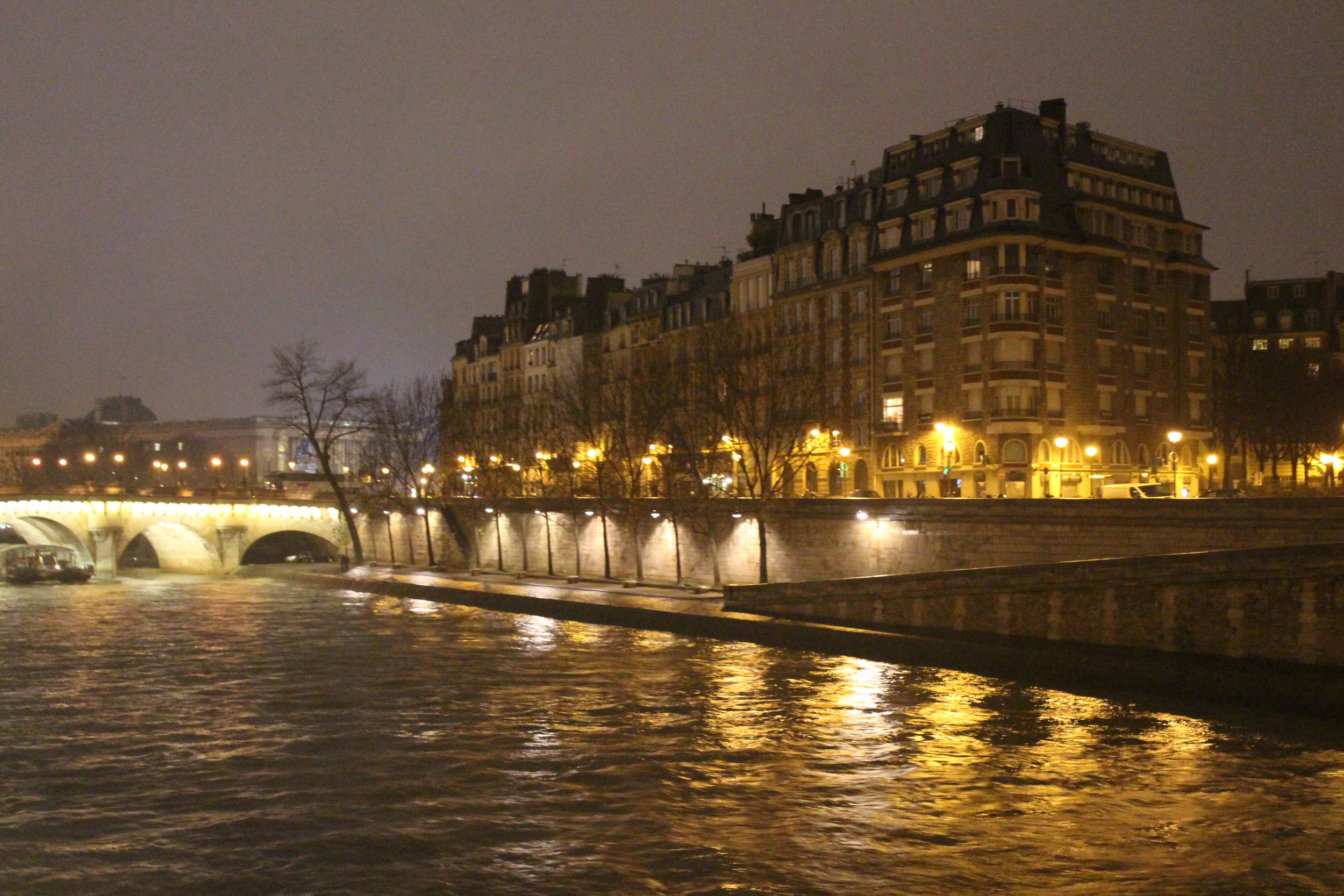
Gulls hovered in the air and motorboats buzzed across the water as our ship carried us past Piazza San Marco and into Venice.
It was one of those travel arrivals I'll never forget.
Venice isn't like other cities. There are no normal streets filled with cars in the historic center. Instead, canals function as roads, boats replace taxis and delivery trucks, and hundreds of bridges connect a maze of narrow pedestrian lanes.
At first, it can feel chaotic.
Then you realize the chaos is part of what makes Venice so incredible.
Yes, Venice can be crowded. Yes, parts of it can feel overly touristy. And yes, you're probably going to get lost at least once.
That's okay.
Getting lost in Venice may be one of the best things you can do.
We've visited more than once, stayed in different parts of the city, traveled the Grand Canal by vaporetto, wandered through Dorsoduro, visited the islands, eaten cicchetti beside canals and spent far too much money on drinks with spectacular views.
If you're visiting Venice for the first time, two days gives you enough time to experience many of the city's highlights without turning your vacation into a race.
This guide covers exactly how I'd spend two days in Venice, along with where we've stayed, where we've eaten, how to get from the airport, current transportation costs and several lessons we've learned along the way.
““This was Venice, the flattering and suspect beauty this city, half fairytale and half tourist trap, in whose insalubrious air the arts once rankly and voluptuously blossomed, where composers have been inspired to lulling tones of somniferous eroticism.”
”
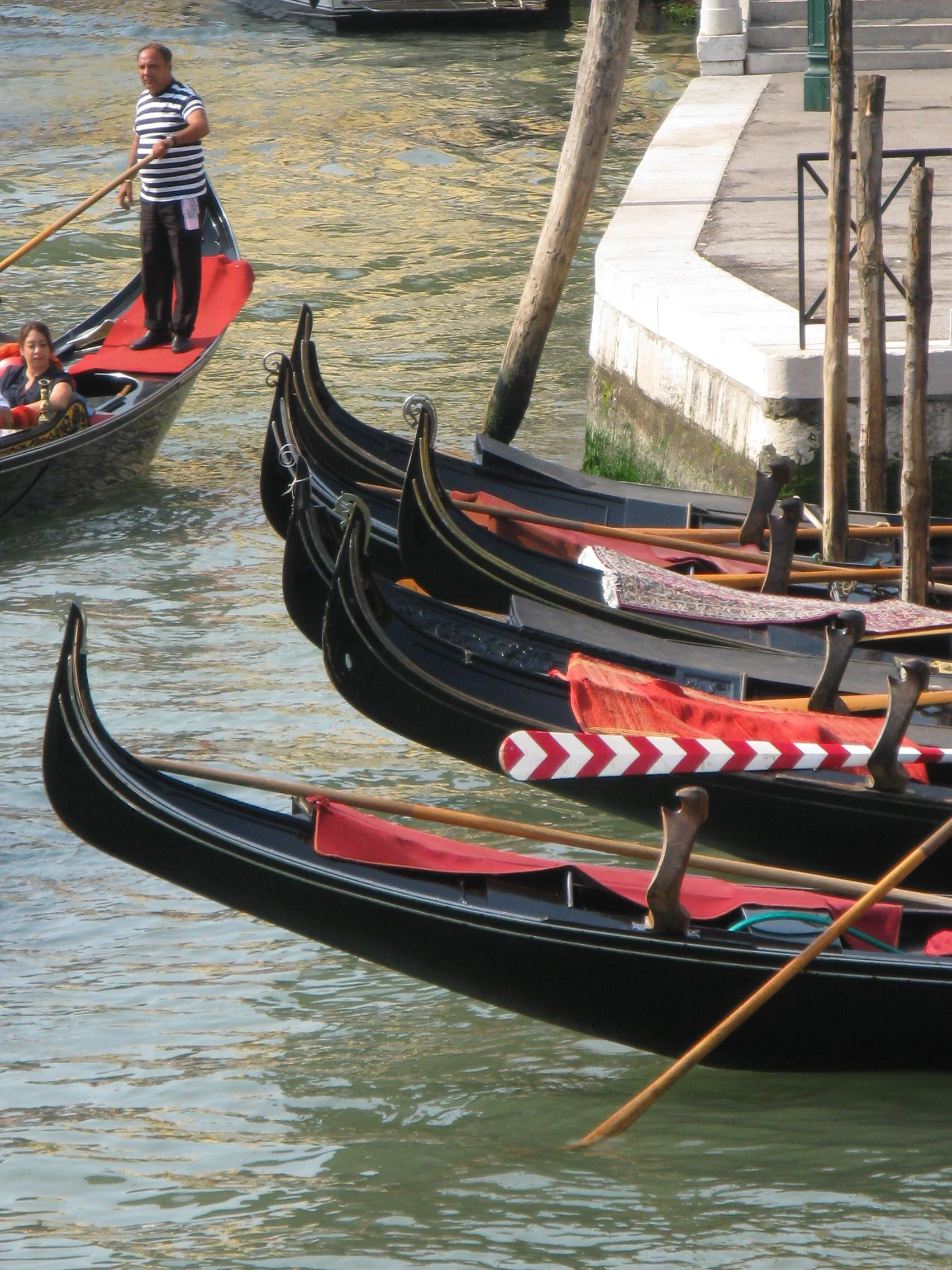
Traditional gondolas moored along at the Grand Canal in Venice, Italy
Venice at a Glance
Venice is built across a collection of small islands in the Venetian Lagoon, connected by canals and hundreds of bridges. The city and its lagoon are UNESCO World Heritage sites, and there really is nowhere else quite like it.
For a first visit, I think two full days is the minimum I'd recommend. Three days is even better if you want to add Murano, Burano or Torcello without rushing.
Spring and fall are generally my favorite times to visit. July and August can bring intense heat, enormous crowds and some very expensive hotel rooms.
Venice is also a city where packing light matters. Bridges often have stairs, sidewalks can be uneven, and dragging a giant suitcase through Venice quickly stops being romantic.
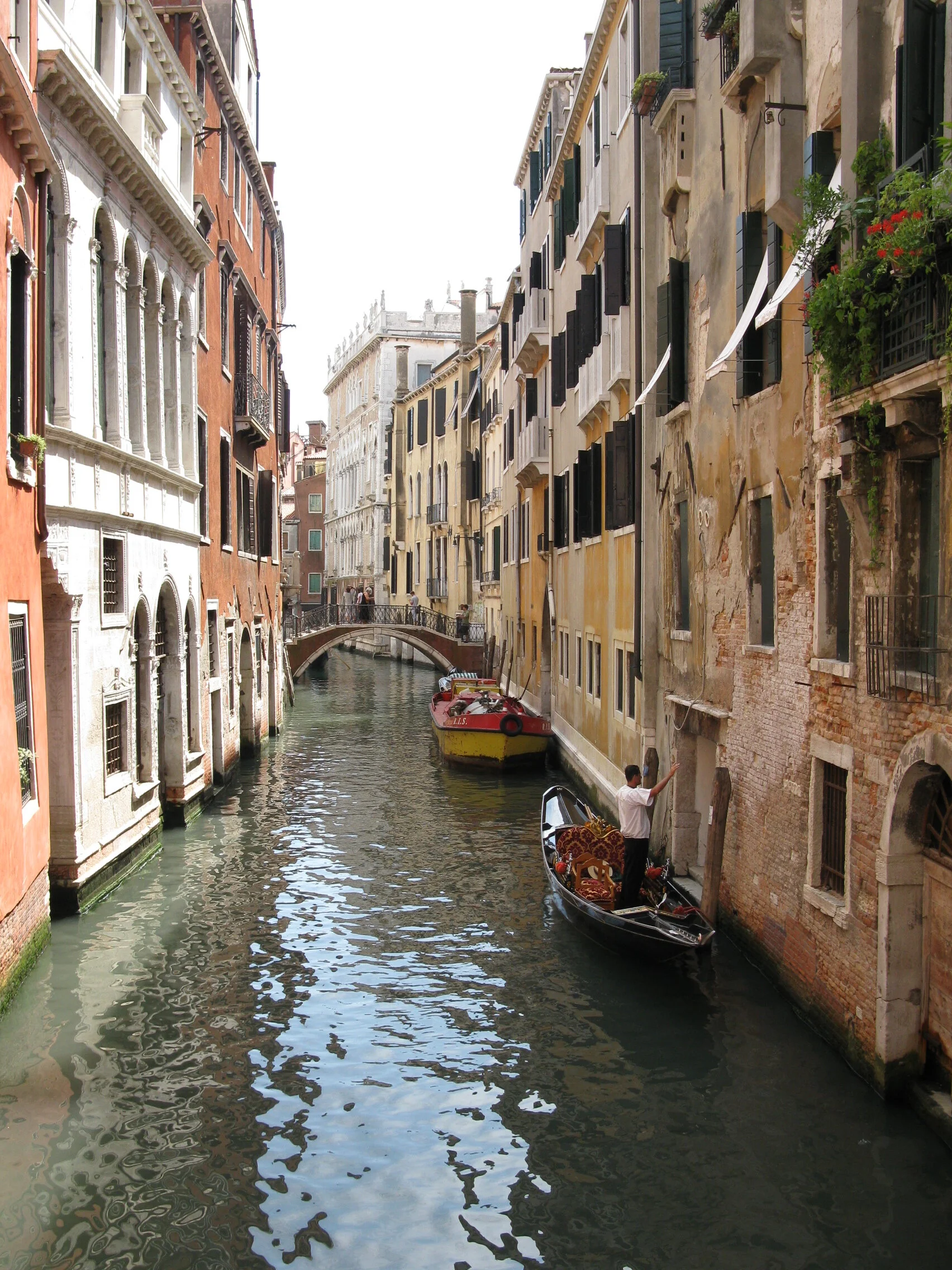
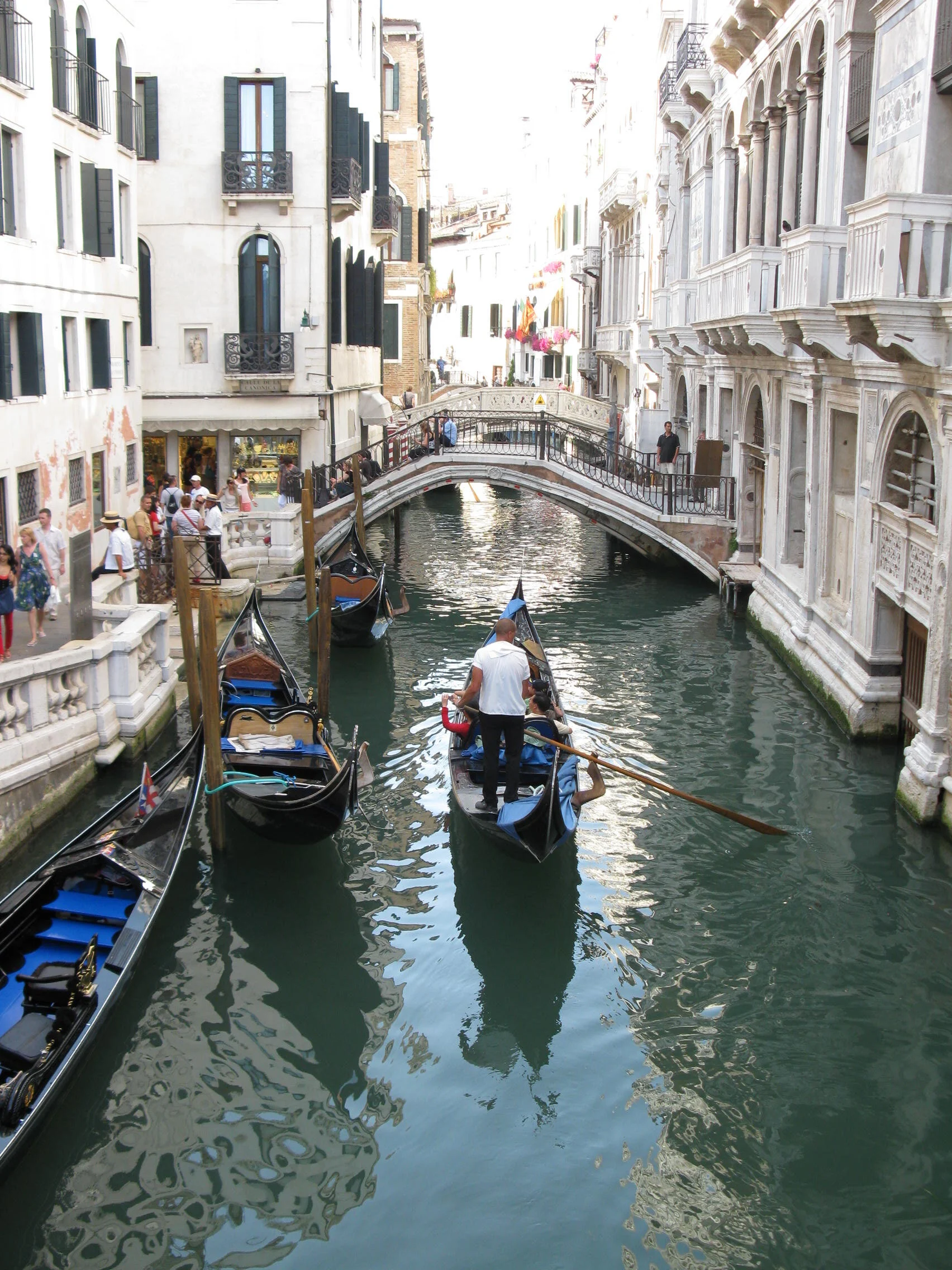
Gondola passing through a narrow Venice canal lined with historic buildings
Venice Access Fee: What You Need to Know
Venice now uses an access-fee system on selected high-traffic dates for day visitors.
During 2026, the fee applied on 60 selected days between April and July from 8:30 a.m. until 4 p.m. Visitors who paid sufficiently early paid €5, while later bookings cost €10.
That 2026 period has now ended.
Rules and prices for future years can change, so if you're planning a 2027 trip, check Venice's official Access Fee website before you travel.
Overnight guests generally fall under different rules than day visitors because accommodation guests already pay Venice's tourist tax, but you may still need to complete the required exemption procedure when the program is operating.
Getting From Venice Marco Polo Airport to Venice
Getting from Marco Polo Airport into Venice isn't difficult, but it's worth understanding your options before you arrive.
This is especially important if you're carrying luggage.
Trust me: you do not want to begin your Venetian vacation dragging two enormous suitcases over six bridges because you chose the wrong transportation.
Airport Bus to Piazzale Roma
One of the least expensive options is taking the airport bus to Piazzale Roma, the main road-transport terminal at the edge of Venice.
The ACTV airport bus currently costs €10 one way or €18 round trip.
Once you reach Piazzale Roma, you can continue by vaporetto.
If you're staying near Piazza San Marco, Vaporetto Line 1 is the slow scenic route down the Grand Canal—and that's not a bad thing.
Line 1 gives you a wonderful introduction to Venice.
A standard vaporetto ticket currently costs €9.50, although a multi-day pass may make more sense if you'll be using public transportation throughout your stay.
Alilaguna Water Bus
Another excellent option is Alilaguna, which travels directly from Marco Polo Airport into Venice by water.
A one-way airport-to-Venice ticket currently costs €18, with a round trip costing €32.
It's slower than a private water taxi, but there is something pretty special about arriving in Venice by boat.
Private Water Taxi
Then there's the James Bond option.
The private water taxi.
It's significantly more expensive, but if you're staying at a hotel with its own water entrance, being whisked directly from the airport to the hotel's dock is about as Venetian as an arrival gets.
If you're traveling with several people or celebrating something special, this might be one of those times when the splurge is worth it.
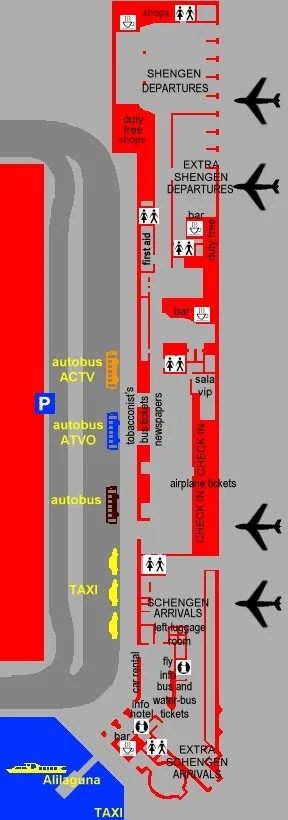
Transport options from the Airport.
Check out our packing list for your next trip!
Getting Around Venice
Your feet will be your primary form of transportation.
For everything else, there's the vaporetto, Venice's public water bus.
A standard ACTV 75-minute ticket currently costs €9.50. If you're going to use the boats several times, the passes quickly begin to make sense: a 24-hour pass is €25, 48 hours is €35, 72 hours is €45 and seven days is €65.
Always validate your ticket before boarding.
And don't look at the vaporetto as simply public transportation.
A ride down the Grand Canal is one of the best sightseeing experiences in Venice.
Gondola Rides
Yes, they're touristy.
Yes, they're expensive.
And yes, I still think there's something magical about taking a gondola through Venice.
The official daytime rate is currently €90 for a 30-minute ride, while rides after 7 p.m. cost €110 for 35 minutes. The price is for the gondola—not per person—and the current maximum is five passengers.
You aren't just paying for transportation.
You're paying for one of those experiences that could only happen in Venice.
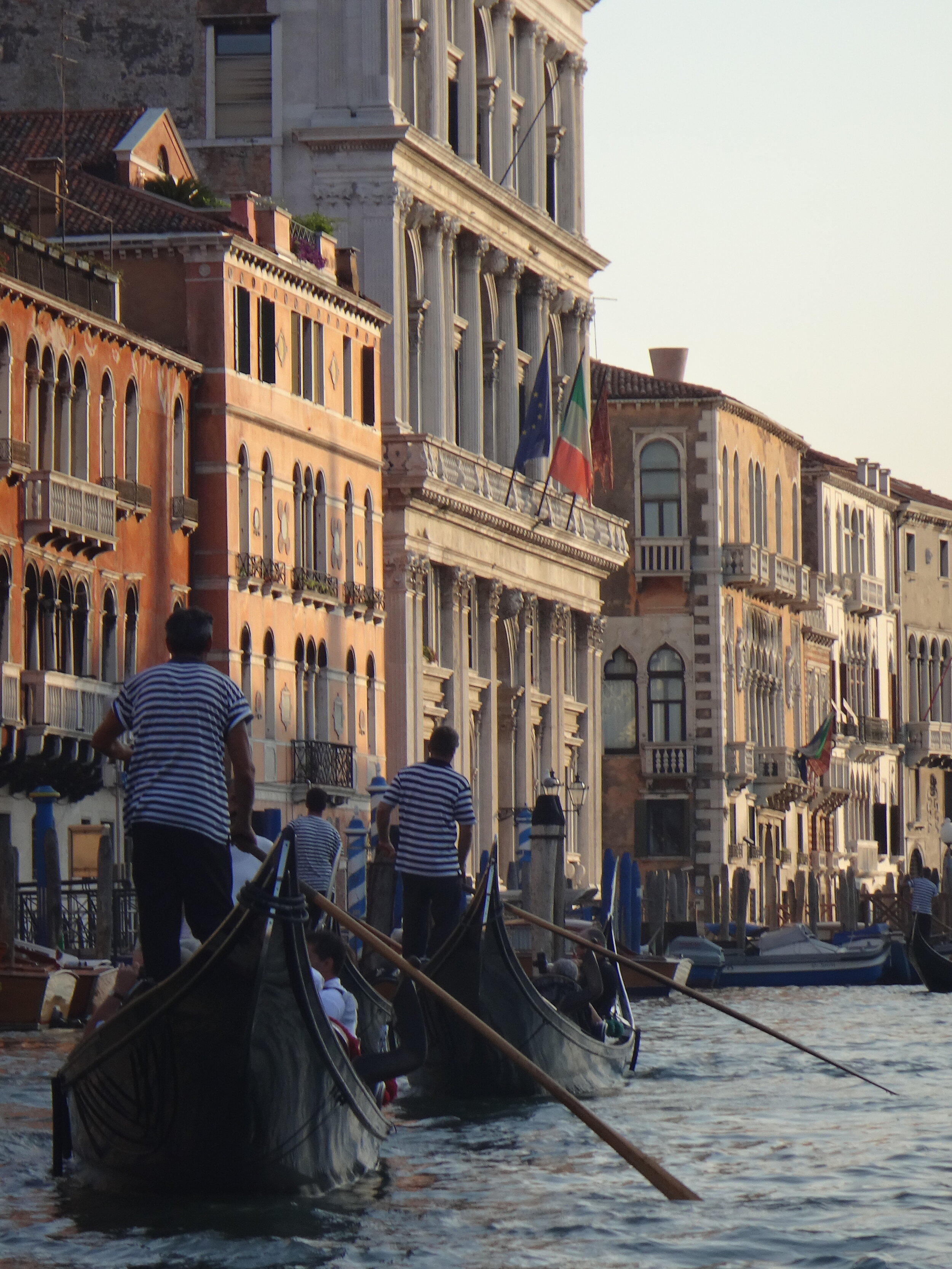
Gondoliers rowing passengers past historic buildings in Venice, Italy

Elaborate Venetian Carnival mask and costume in Venice, Italy Photo credit: Squarespace
Venetian Masks and Carnival
Venetian masks have been part of the city's culture for centuries.
Historically, masks allowed people to hide their identities and, at least temporarily, blur some of the lines between social classes. Today they're most closely associated with the Carnival of Venice, when elaborate costumes and masks transform the city into something that feels almost theatrical.
Some of the masks are spectacular works of art.
Others are slightly creepy.
I've always thought some of them had a definite Eyes Wide Shut quality.
If you've dreamed of seeing Venice during Carnival, the next official Carnival runs from January 23 through February 9, 2027.
Expect crowds.
Also expect something you'll probably never experience anywhere else.
Hotels during Carnival can fill far in advance, so this is one trip where I would not recommend waiting until the last minute.
Where We've Stayed in Venice
We've stayed in several different Venice hotels over the years, and one thing I've learned is that location matters tremendously here.
Saving a little money on a hotel can become less appealing when you're dragging luggage through alleyways and across bridges.
If your budget allows it, I would strongly consider staying directly on or close to the Grand Canal.
The St. Regis Venice ($$$$)
The location of the St. Regis Venice is phenomenal.
You're close to Piazza San Marco, high-end shopping, Teatro La Fenice and the Grand Canal, making it extremely convenient for a first-time visitor.
We stayed in a city-view room, which was nice, but if your budget allows for a Grand Canal view or terrace, this is one hotel where I'd seriously consider the upgrade.
The property combines modern luxury with the kind of waterfront location that reminds you constantly that you're in Venice.
Even if you're not staying here, stopping in for a drink with a view can be an experience in itself.
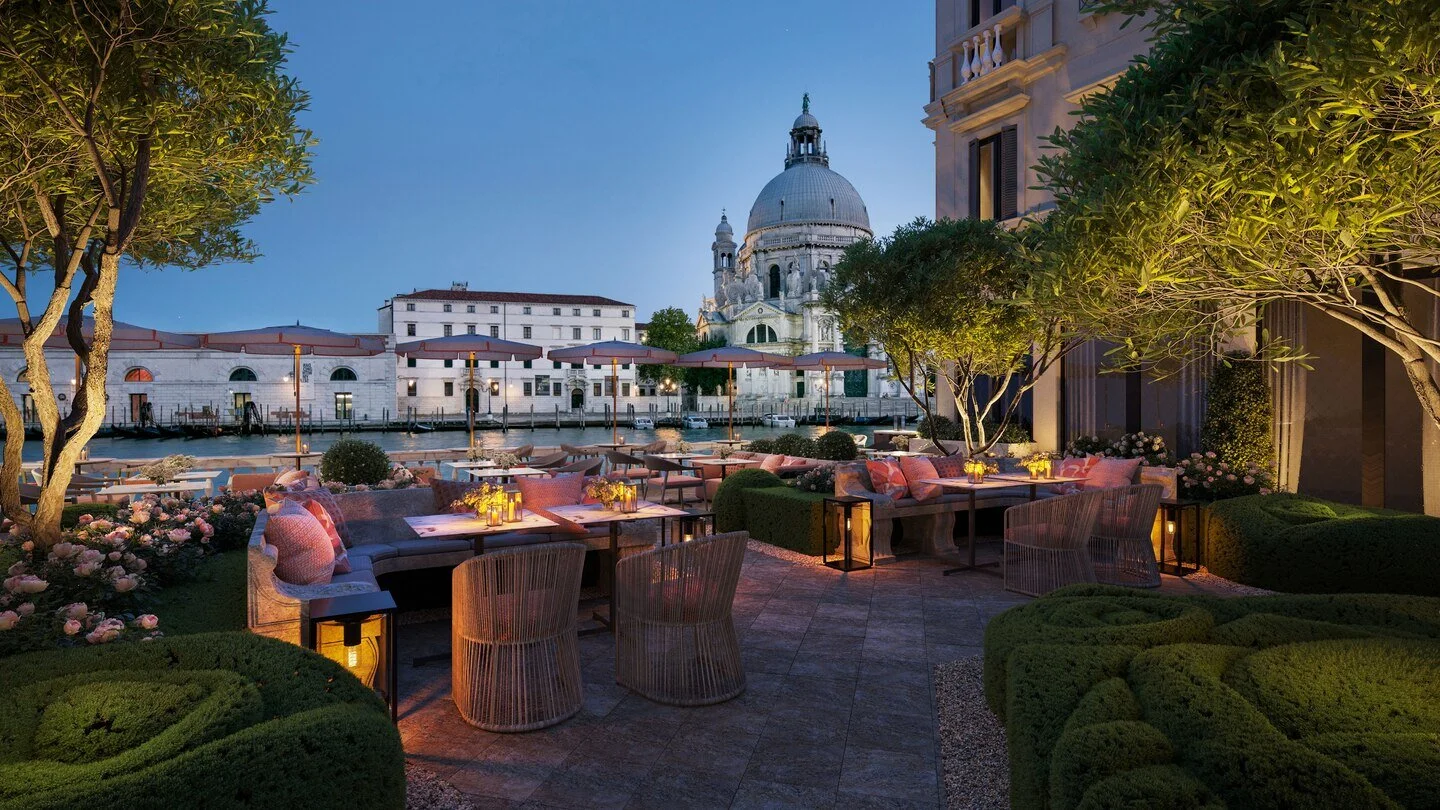
Garden terrace at The St. Regis Venice overlooking the Grand Canal and Santa Maria della Salute Photo credit: St. Regis Venice
Hotel Monaco & Grand Canal ($$$)
If location is your priority, this hotel is difficult to beat.
Hotel Monaco & Grand Canal is just steps from Piazza San Marco and sits directly on the water.
One major advantage is its water entrance. If you arrive by private water taxi, you can essentially pull right up to the hotel rather than dragging luggage through Venice.
Again, I'd spend the extra money for a canal-view room if it's within your budget.
You've come all this way.
Looking out your window and seeing boats moving across the Grand Canal is part of the experience.
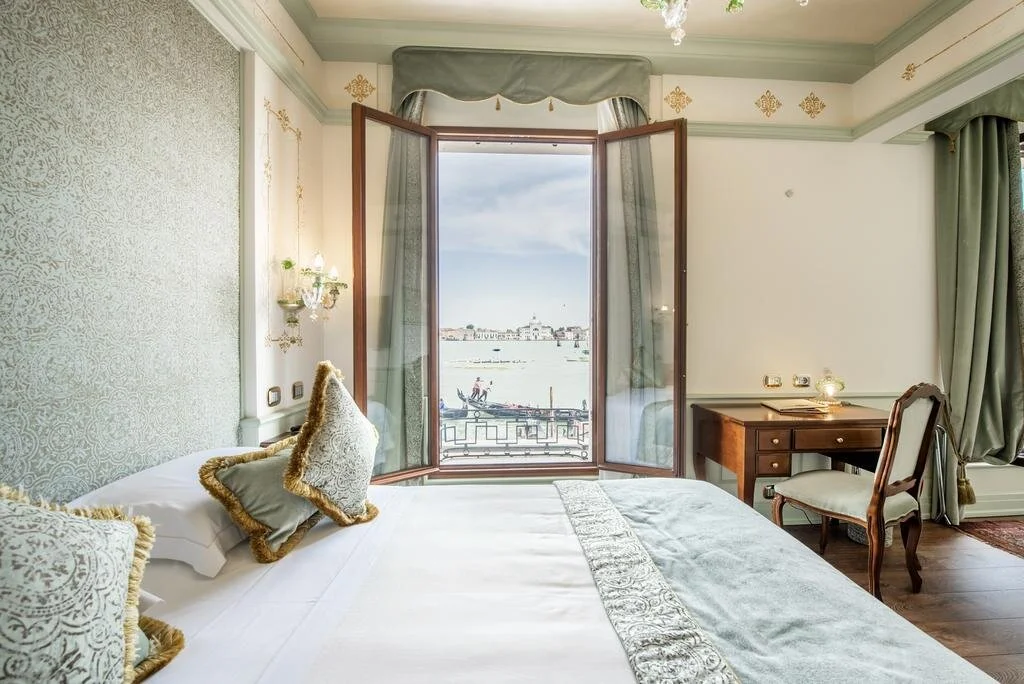
Canal-view guest room at Hotel Monaco & Grand Canal in Venice, Italy Photo credit: Hotel Monaco
NH Collection Venezia Palazzo Barocci ($$$)
Palazzo Barocci gives you a different Venice experience.
It's still directly on the Grand Canal, but the location feels quieter than the area immediately surrounding San Marco.
The Sant'Angelo vaporetto stop is right outside, which makes getting around extremely easy, and the property has its own water access.
We found the hotel to be a nice combination of traditional Venetian character and more modern comforts.
And yes, I'm going to repeat myself:
If you can afford the canal view, get the canal view.
You're in Venice.
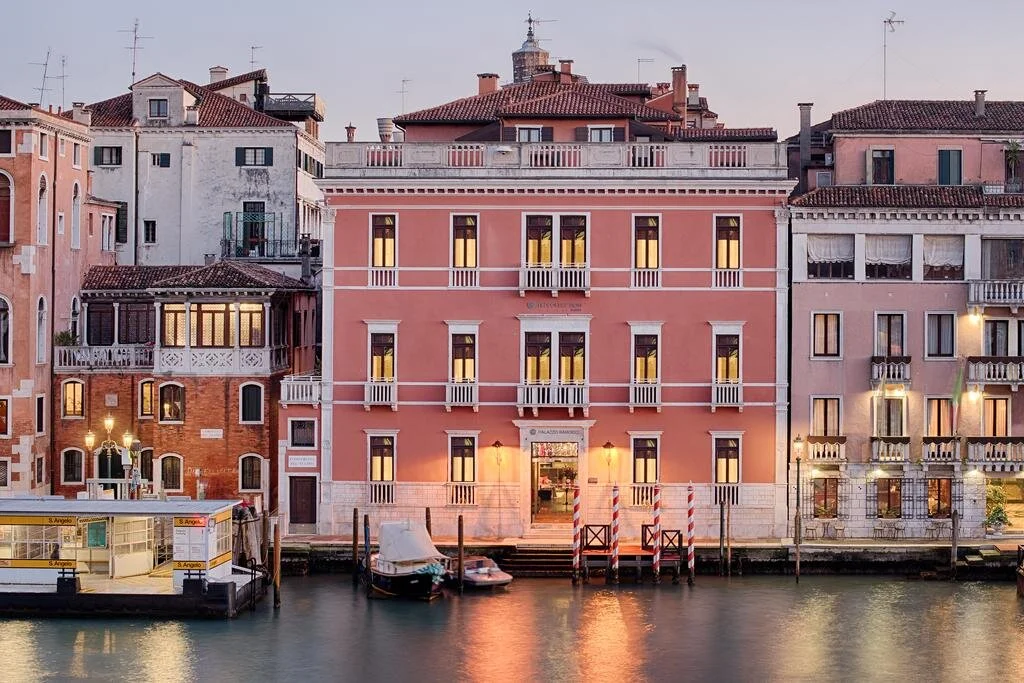
photo credit: NH Collection Venezia Palazzo Barocci
Venice is one city where I would compare location as carefully as price. A slightly more expensive hotel near a vaporetto stop or the Grand Canal can save you a surprising amount of walking with luggage.
What to Eat in Venice
One of the mistakes visitors make is assuming Venetian food is simply generic Italian food.
It isn't.
Venice has its own culinary traditions shaped by the lagoon, seafood, trade routes and centuries of history.
And you don't need to spend a fortune to eat well.
One of my favorite ways to eat in Venice is to stop at a bacaro, a traditional Venetian wine bar, and order cicchetti—small bites that you can think of loosely as Venice's answer to tapas.
Try sarde in saor, sardines prepared with onions and vinegar; baccalà mantecato, creamy whipped salt cod; seppie al nero, cuttlefish prepared with its ink; and risi e bisi, the traditional Venetian combination of rice and peas.
Order a few cicchetti, have a glass of wine and then wander until you find another bacaro.
That's a pretty good afternoon in Venice.
My Favorite Venetian Restaurants
Osteria Bancogiro
Bancogiro remains one of my favorite locations around Rialto.
It sits near the Rialto Bridge with a beautiful setting on the Grand Canal, and its kitchen focuses on seasonal, regionally inspired dishes using ingredients connected to the nearby Rialto Market.
You can stop for cicchetti and wine or turn it into a full meal.
The location alone makes it worth considering.
Harry's Bar ($$$$)
Harry's Bar is one of those places where you're paying partly for the history.
Giuseppe Cipriani opened Harry's Bar in 1931, and in 1948 he created the Bellini there by combining white peach purée with Prosecco.
The place became famous for attracting writers, artists and celebrities, including Ernest Hemingway.
It's tiny.
It's expensive.
And it's an institution.
My suggestion is to go in knowing exactly what it is. Have a Bellini, enjoy the history and don't expect it to be the cheapest drink you'll have in Italy.
Osteria Al Squero ($$)
This is one of those places I love because the setting is as memorable as the food.
Osteria Al Squero sits in Dorsoduro directly across the canal from a traditional gondola boatyard.
Grab some cicchetti and wine and join everyone sitting along the canal wall outside.
The menu changes, but you'll typically find small bites with fish, meat and vegetables along with local wines.
It's casual, inexpensive compared with many restaurants around San Marco and feels much more relaxed.
Ristorante La Caravella ($$$)
La Caravella is close to Piazza San Marco but feels worlds away from grabbing food from one of the tourist restaurants surrounding the square.
It's a more refined experience and a good choice when you want to splurge on a special dinner.
We've had excellent seafood here, and the setting makes it feel like an occasion rather than simply another meal.
If you're celebrating an anniversary, birthday or just want one memorable dinner in Venice, this is the type of place I'd save for it.
If You Want to Escape Venice for a Few Hours:
Locanda Cipriani
Torcello offers a completely different side of the Venetian Lagoon.
Locanda Cipriani has been welcoming guests since the years following World War II and became known as a retreat for people looking for privacy—including Ernest Hemingway and Queen Elizabeth.
The restaurant still operates on Torcello today.
You can dine inside or in the garden, surrounded by a much quieter atmosphere than you'll find around Piazza San Marco.
If you have three or more days in Venice, combining Torcello with Murano or Burano makes for a wonderful escape from the crowds.

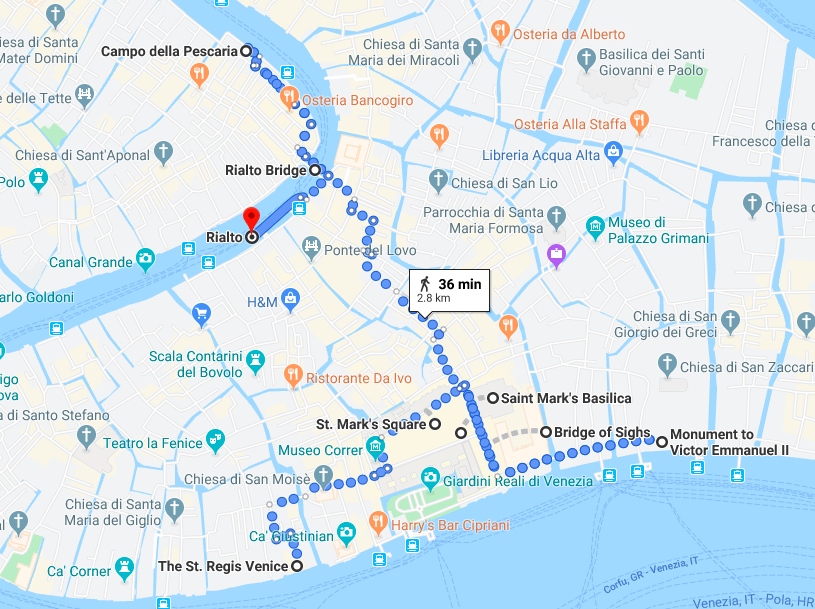
The entire walk is only 36 minutes!!
Day 1: Piazza San Marco, Doge's Palace, Rialto & a Gondola Ride
For this itinerary, we'll continue to use the St. Regis as our starting point because that's how we originally explored this part of the city.
From the hotel, walk toward Calle Larga XXII Marzo and follow it toward Piazza San Marco.
You'll pass some seriously expensive stores along the way.
Welcome to Venice.
Piazza San Marco
When you emerge into Piazza San Marco for the first time, take a minute before rushing to the next attraction.
This is one of the great public squares of Europe.
You'll immediately see the Campanile towering above the square, with St. Mark's Basilica dominating one end.
St. Mark's Basilica
The Basilica di San Marco is extraordinary inside.
Gold mosaics seem to cover everything, and the mixture of Byzantine, Gothic and Venetian influences makes it completely different from most European cathedrals.
Remember that this is an active church.
Current entry rules require appropriate clothing with shoulders and knees covered, and timed tickets are available through the Basilica's official site.
I'd reserve your entry ahead of time during busy periods rather than spending part of your short Venice visit standing in line.
Doge's Palace
Next door is the Doge's Palace, once the center of political power for the Venetian Republic.
This is one attraction I wouldn't rush.
The palace takes you through enormous ceremonial rooms, government chambers, an armory and eventually into the prison complex.
Walking through these rooms gives you a much better understanding of just how powerful Venice once was.
Bridge of Sighs
From the palace area, walk toward the Ponte della Paglia.
From the bridge you'll get the classic exterior view of the Bridge of Sighs.
The famous name comes from the idea that prisoners crossing toward their cells would sigh as they caught one final glimpse of Venice through the bridge's small windows.
Whether every part of that story is romanticized or not, it certainly makes for a good Venice story.
Walk the Waterfront
Continue east along the waterfront.
This is the Riva degli Schiavoni, and you'll have beautiful views toward San Giorgio Maggiore across the water.
Restaurants, cafés and shops line portions of the route, but sometimes the best thing to do here is simply walk and watch Venice move around you.
Then turn back through Piazza San Marco and begin working your way toward Rialto.
Rialto Bridge
Don't worry too much about the exact route.
Follow the signs marked Rialto and enjoy getting a little lost along the way.
You'll eventually emerge at the Rialto Bridge, one of Venice's most recognizable landmarks.
The current stone bridge dates to the late 16th century and spans the Grand Canal with shops running along both sides.
Yes, it gets crowded.
You still have to see it.
Rialto Market
Cross into the San Polo side and continue toward the Rialto Market.
This area has been connected to Venetian commerce for centuries, and the fish and produce markets remain a glimpse into a Venice that exists beyond souvenir stores.
The market is best experienced earlier in the day.
If seeing it in full swing is important to you, reverse this part of the itinerary: visit Rialto Market first thing in the morning and then continue toward San Marco.
Stop at Osteria Bancogiro for lunch or cicchetti while you're in the area.
Take the Vaporetto Back Down the Grand Canal
Instead of walking back, hop aboard Vaporetto Line 1 from Rialto toward San Marco.
Sit outside if there's room.
You'll cruise beneath palaces lining the Grand Canal and see Venice from the perspective from which much of it was designed to be seen:
the water.
For €9.50, it's also one of the least expensive sightseeing tours in Venice.
Finish With a Gondola Ride
Finish your first day with a gondola.
I'd wait until later in the afternoon or early evening when the light softens and some of the day-trippers begin leaving.
The official daytime price is currently €90 for 30 minutes, increasing to €110 for 35 minutes after 7 p.m.
You don't have to do it.
But if this might be your only trip to Venice, I think you'll be glad you did.
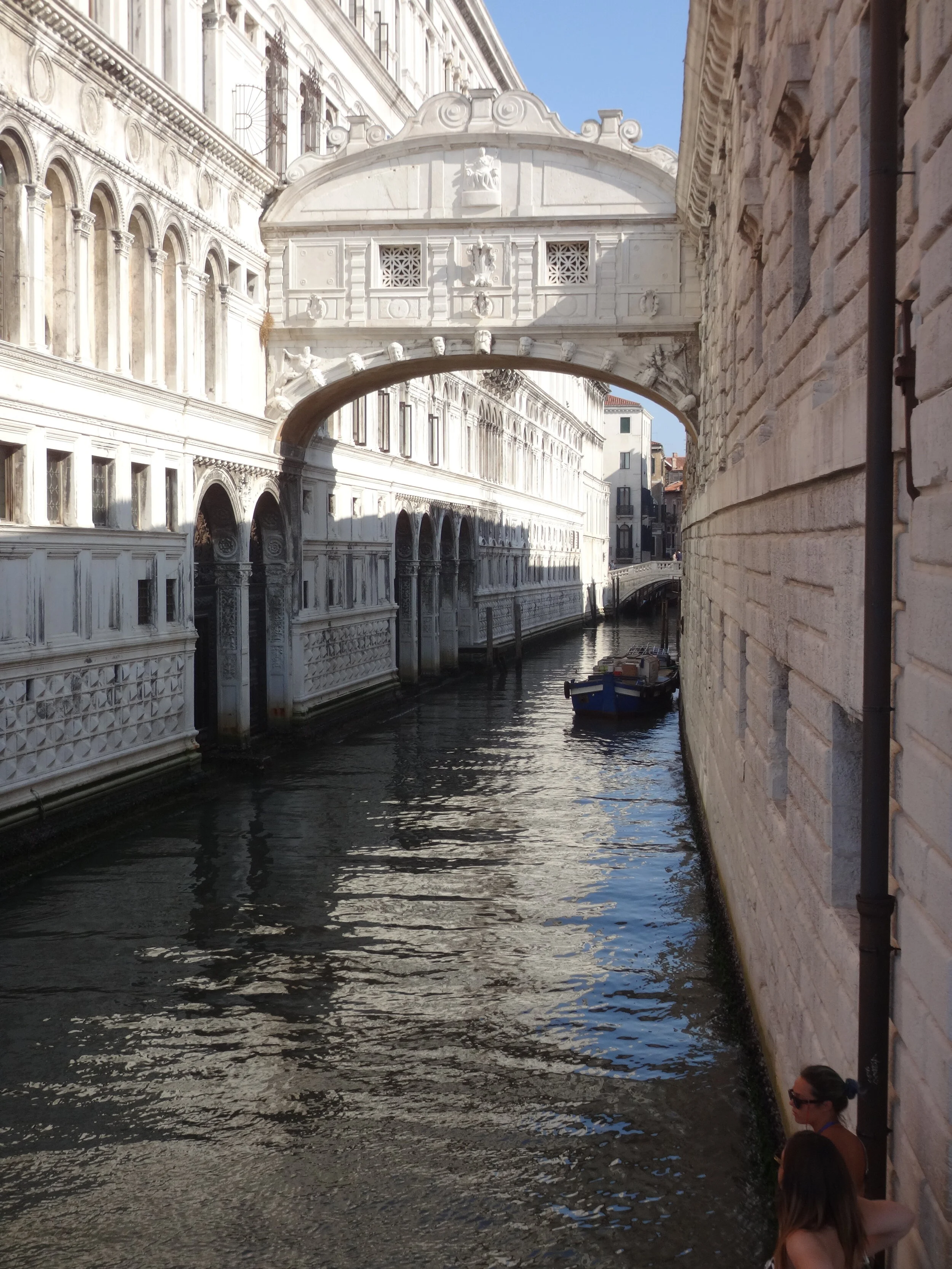
Bridge of Sighs spanning the Rio di Palazzo beside Doge's Palace in Venice, Italy

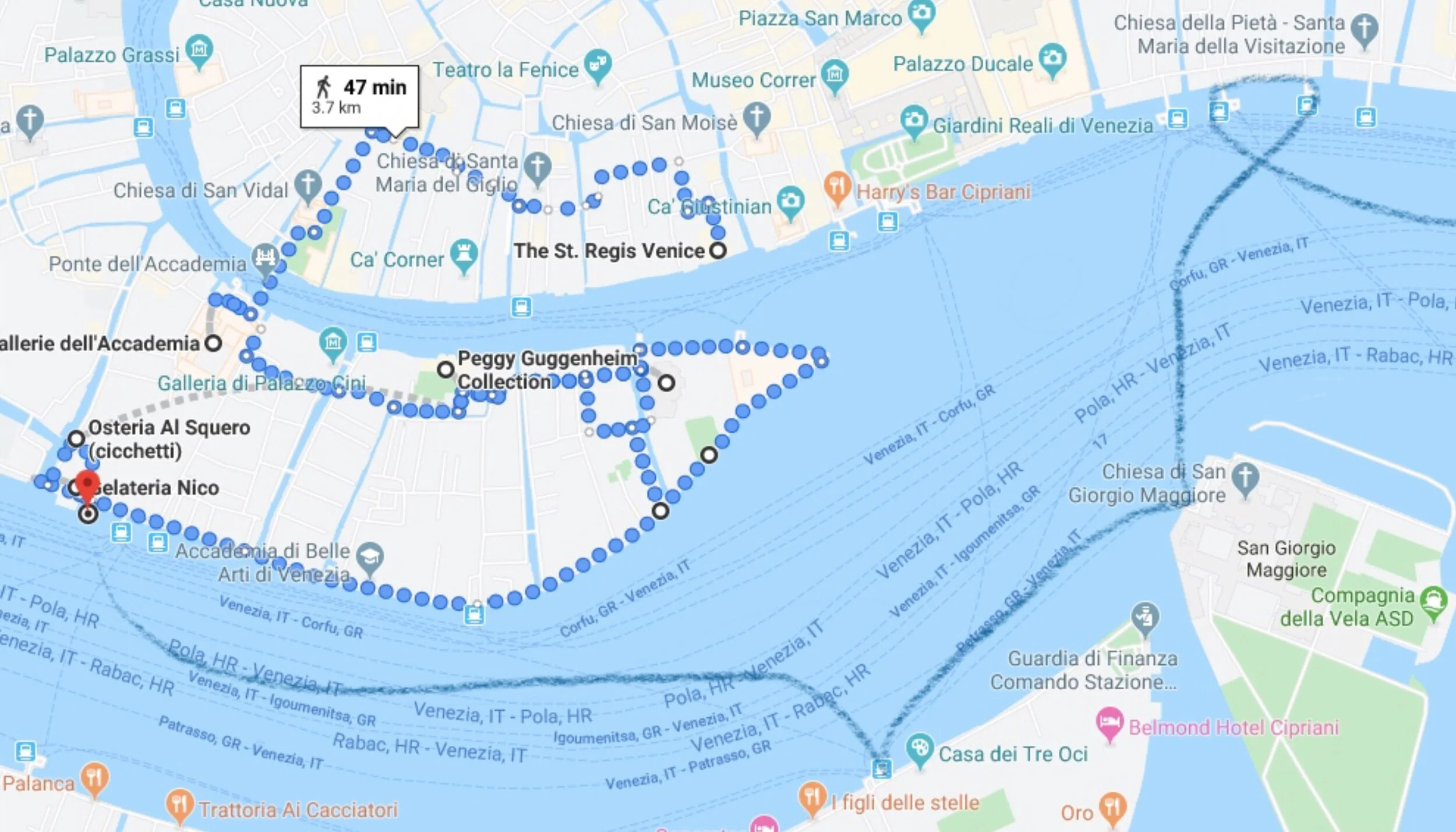
Credit: Google maps
Day 2: Dorsoduro, Art, Cicchetti & the Lagoon
Your second day takes you away from some of the heaviest crowds surrounding San Marco.
Once again, begin near the Grand Canal and walk toward the Ponte dell'Accademia.
Crossing this wooden bridge gives you one of the classic views down the Grand Canal toward Santa Maria della Salute.
Stop.
Take the picture.
Everyone does.
There's a reason.
Gallerie dell'Accademia
At the foot of the bridge is the Gallerie dell'Accademia, home to one of the world's great collections of Venetian art.
If you love Titian, Tintoretto, Veronese and Bellini, give yourself time here.
If museums aren't really your thing, keep moving.
Venice itself is a museum.
Peggy Guggenheim Collection
A short walk away is the Peggy Guggenheim Collection, housed in her former home on the Grand Canal.
This is one of the best stops in Venice for anyone who prefers 20th-century art to Renaissance masters.
The collection includes works by Picasso, Pollock, Dalí, Kandinsky and other major modern artists.
Even the sculpture garden is worth your time.
Santa Maria della Salute
Continue toward the huge dome of Basilica di Santa Maria della Salute.
It's one of the most recognizable buildings on the Venetian skyline.
From there, continue out to Punta della Dogana, where the Grand Canal meets the Giudecca Canal.
This is one of my favorite places simply to stop and look back toward San Marco.
Walk the Zattere
Continue along the waterfront through Dorsoduro toward the Zattere.
The atmosphere here is noticeably different from Piazza San Marco.
It's calmer.
More residential.
And it gives you a chance to breathe a little.
Stop at Osteria Al Squero for cicchetti and wine while watching gondolas being worked on across the canal.
That's the Venice I remember.
San Giorgio Maggiore
Later in the afternoon, take a vaporetto across to San Giorgio Maggiore.
The church sits directly across the basin from Piazza San Marco and offers one of the finest views back toward Venice.
If the bell tower is open during your visit, go up.
You'll understand the geography of Venice much better when you're looking down at the lagoon from above.
Should You Add Murano?
You can.
But don't force it.
Murano deserves at least a couple of hours, especially if you want to watch glassmaking or shop for authentic Murano glass.
If you only have two days in Venice and you've already spent the morning in museums and Dorsoduro, adding Murano can turn a relaxed day into a marathon.
I'd personally choose one or the other.
If you have a third day, that's when I'd visit Murano, Burano and possibly Torcello.
Finish With Dinner
For your final evening, head back toward San Marco and have a proper dinner.
La Caravella would be my choice if you're looking to finish the trip with something special.
Then do one last thing.
Walk.
Venice changes after dark.
The day-trip crowds disappear, shop doors close, streets become quiet and you'll occasionally find yourself standing beside a canal with almost nobody around.
That's when Venice becomes magical again.
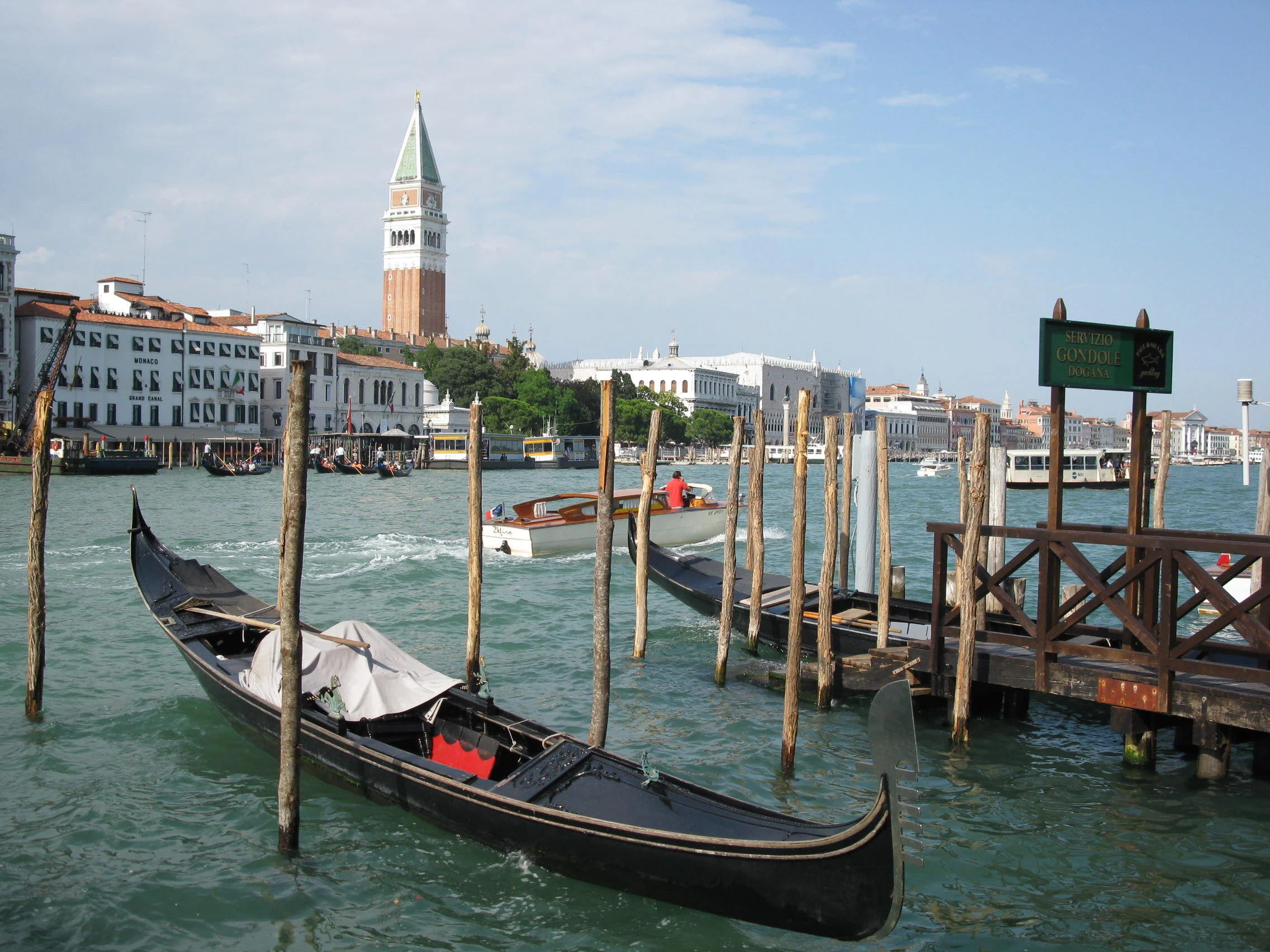
Gondolas on the Venice waterfront with St. Mark's Campanile and Doge's Palace across the water
Final Thoughts on Venice
Venice isn't perfect.
It can be crowded.
It can be expensive.
You will probably take a wrong turn.
You may find yourself staring at Google Maps while standing in an alley that appears to end directly in a canal.
That's Venice.
Don't try to control every minute of it.
See St. Mark's Basilica. Walk through Doge's Palace. Cross the Rialto Bridge. Take the vaporetto. Eat cicchetti. Spend too much money on one ridiculous drink. Ride in a gondola if you've always wanted to.
But also turn down the street where everyone else isn't walking.
another bridge.
Put the phone away.
Venice's biggest attraction isn't any single church, palace or museum.
It's Venice itself.
And after several visits, that's still the part that keeps me wanting to return.
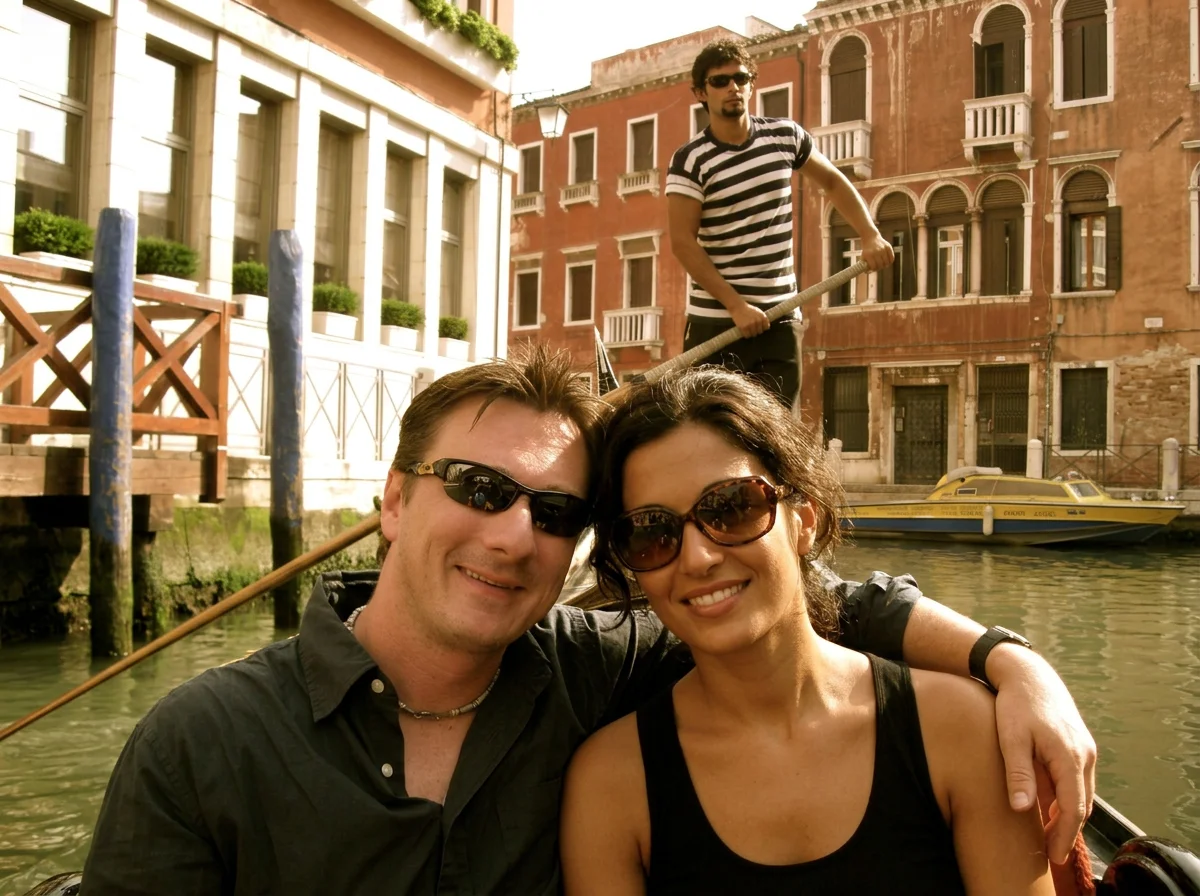
A wonderful ride with my dear friend, Vittoria.
Affiliate disclosure: Some links in this article are affiliate links. If you make a booking or purchase a product through one of these links, I may earn a commission at no additional cost to you. Thank you for supporting Riel American!